Event recap · November 2026
What makes a fintech business fundable? The answer depends on who you ask - and where the company is on its journey.
For one investor, it might be an exceptional founding team with the ambition to build something transformative. For another, it is a working product, early revenue and evidence that customers want what the business is selling. For a lender, the questions extend to how capital will be used and repaid.
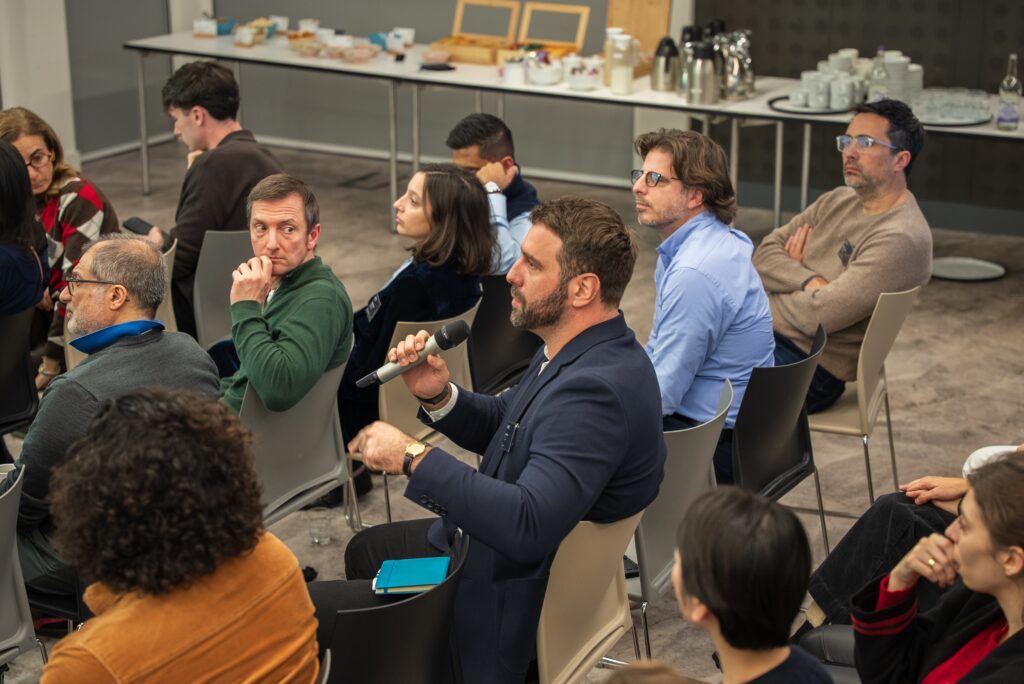
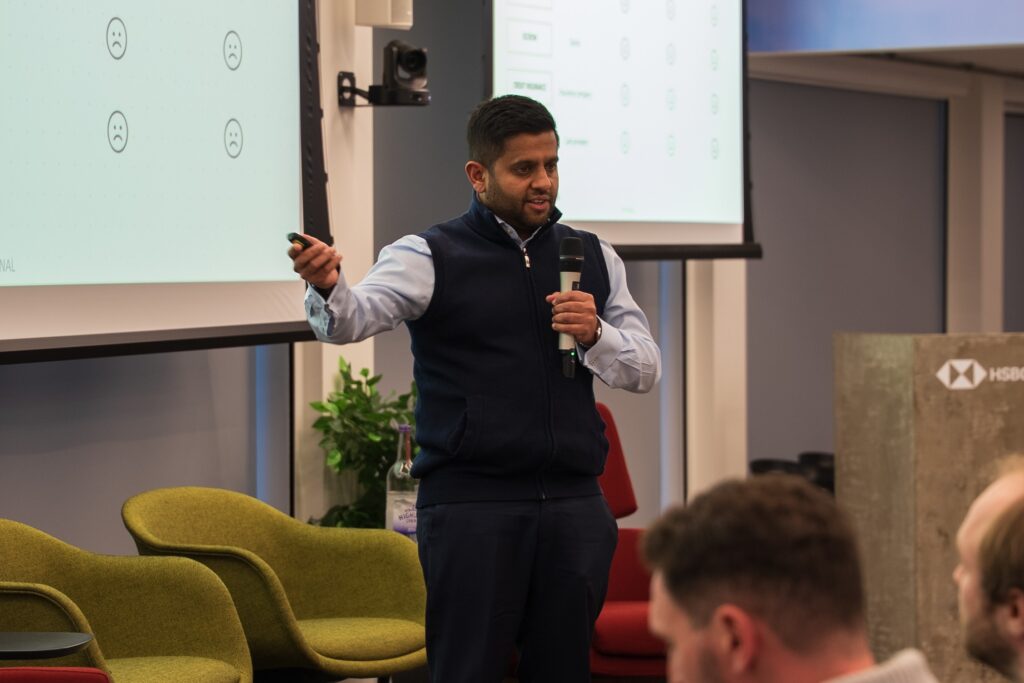
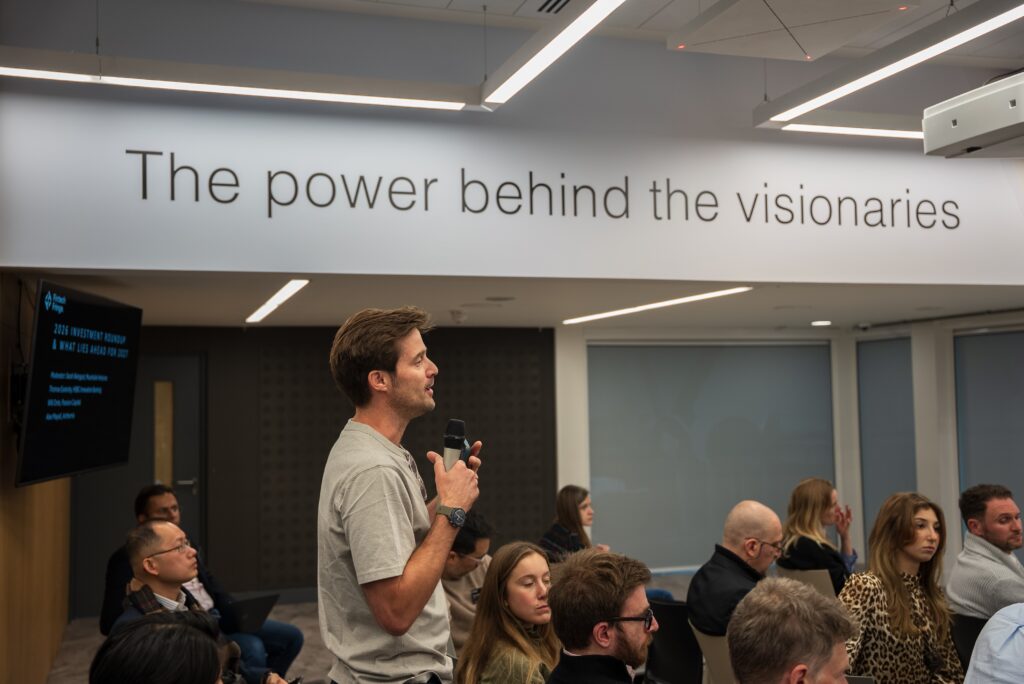
Those different perspectives came together at DealFlow LIVE on 18 November 2026, as Fintech Fringe welcomed fintech founders, investors and ecosystem partners for an afternoon of investment insights, startup pitches and relationship-building.
Curated by Fintech Fringe in partnership with HSBC Innovation Banking, HaysMac and Mountside Ventures, the event connected Seed-to-Series A fintechs with London’s capital ecosystem. Its focus was practical: understanding investors’ priorities, building credible funding propositions and creating connections that last beyond a pitch.
Opening doors to growth
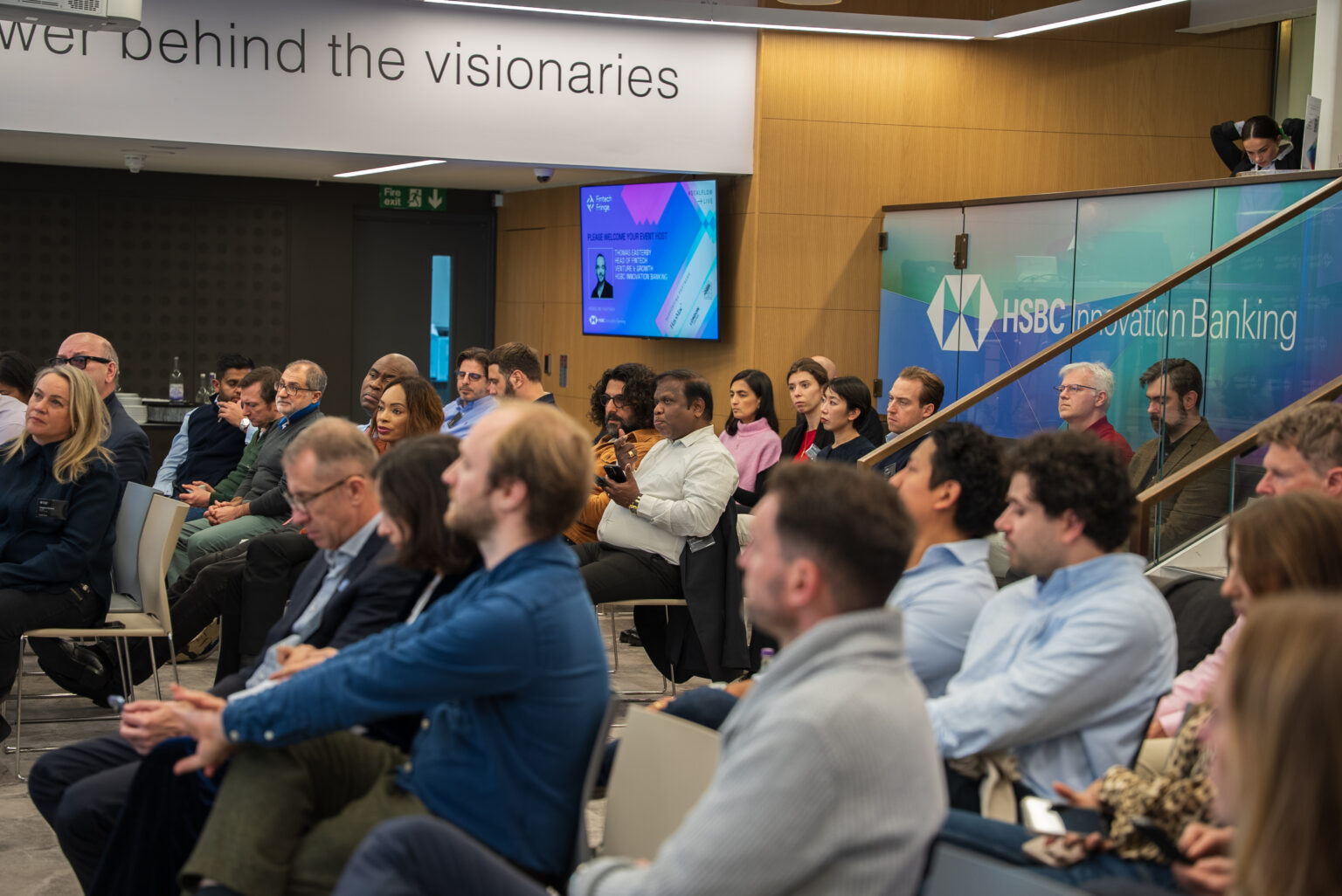
Opening the event, Calypso Harland, Founder of Fintech Fringe, highlighted a recurring challenge for growing businesses: accessing the people who can help them move forward.
Founders need capital, but they also need customers, commercial partners and trusted introductions. Bringing those networks together is central to Fintech Fringe’s role - and to the purpose of DealFlow LIVE.
“It distils down to one thing, which is network access.”
The afternoon gave founders an opportunity to hear how investors think before presenting their own businesses. It also created space to explore a question that can get lost in the pressure to raise: not simply whether an investor will write a cheque, but whether they are the right partner for the company’s next stage.
Different investors, different entry points
The opening investor introductions demonstrated the range of approaches founders encounter when seeking capital.
Will Orde, Partner at Passion Capital, described an investment approach that can begin at day zero. A company does not necessarily need a product, revenue or regulatory permissions already in place for Passion to consider backing its founders.
“No need for product, no need for revenue, no need for regulation, nothing at all.”
At that point, the investment case rests heavily on the founding team, its insight and the scale of its ambition. This is an approach to investment timing - not a suggestion that businesses can operate without the permissions their activities require.
Alex Mayall, Investment Principal at Anthemis, outlined a different entry point. Its seed-stage focus looks for a product, some traction and, typically, non-zero revenue: evidence that a company has begun turning its proposition into something customers will use and pay for.
Naya Johannesen of SquareOne Capital brought an international perspective. She introduced a Miami-based investment firm with roots in fintech and expanding interests across AI, deep tech and infrastructure, alongside connections to Latin America and a focus on the US market.
Nick Sachs of tapio Foundry described an operational investment model combining funding with hands-on support. Investing across the UK and Europe, the firm focuses on B2C technology and businesses before Series A, with seed as its sweet spot. Its approach includes plugging operational teams into portfolio companies to help them scale.
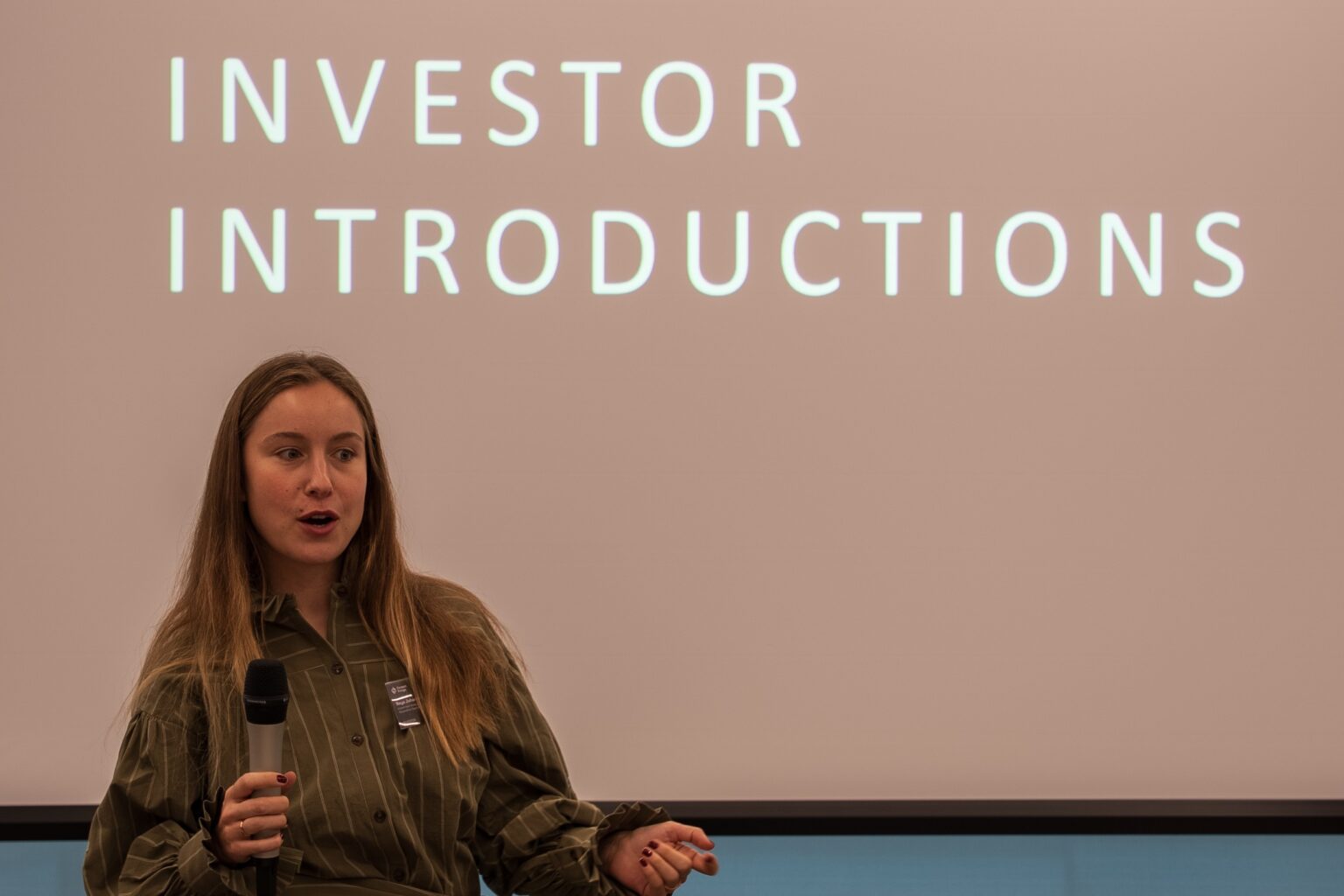
Together, the introductions reinforced an important message: investor fit involves more than sector interest. Stage, geography, traction requirements and the support a business needs all shape whether a relationship makes sense.
The investment outlook: selective capital, new possibilities
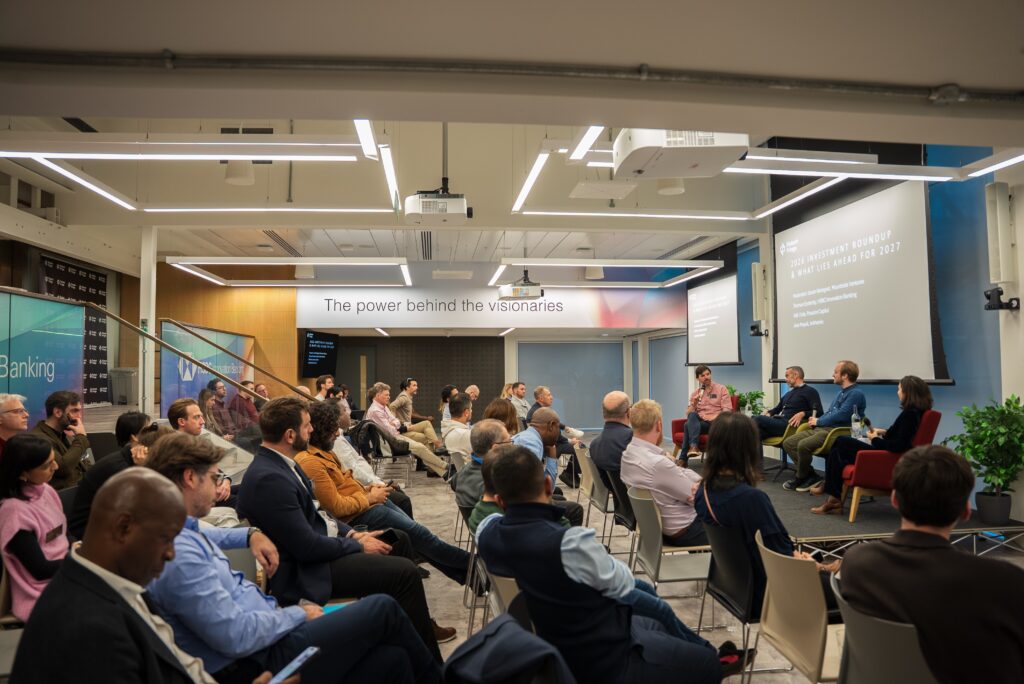
The afternoon’s panel, “Investment Roundup from 2026 and what lies ahead in 2027”, explored the forces reshaping fintech fundraising.
Moderated by Sarah Weingust of Mountside Ventures, the discussion brought together Orde, Mayall and Thomas Easterby, Head of FinTech, Venture & Growth Banking at HSBC Innovation Banking.
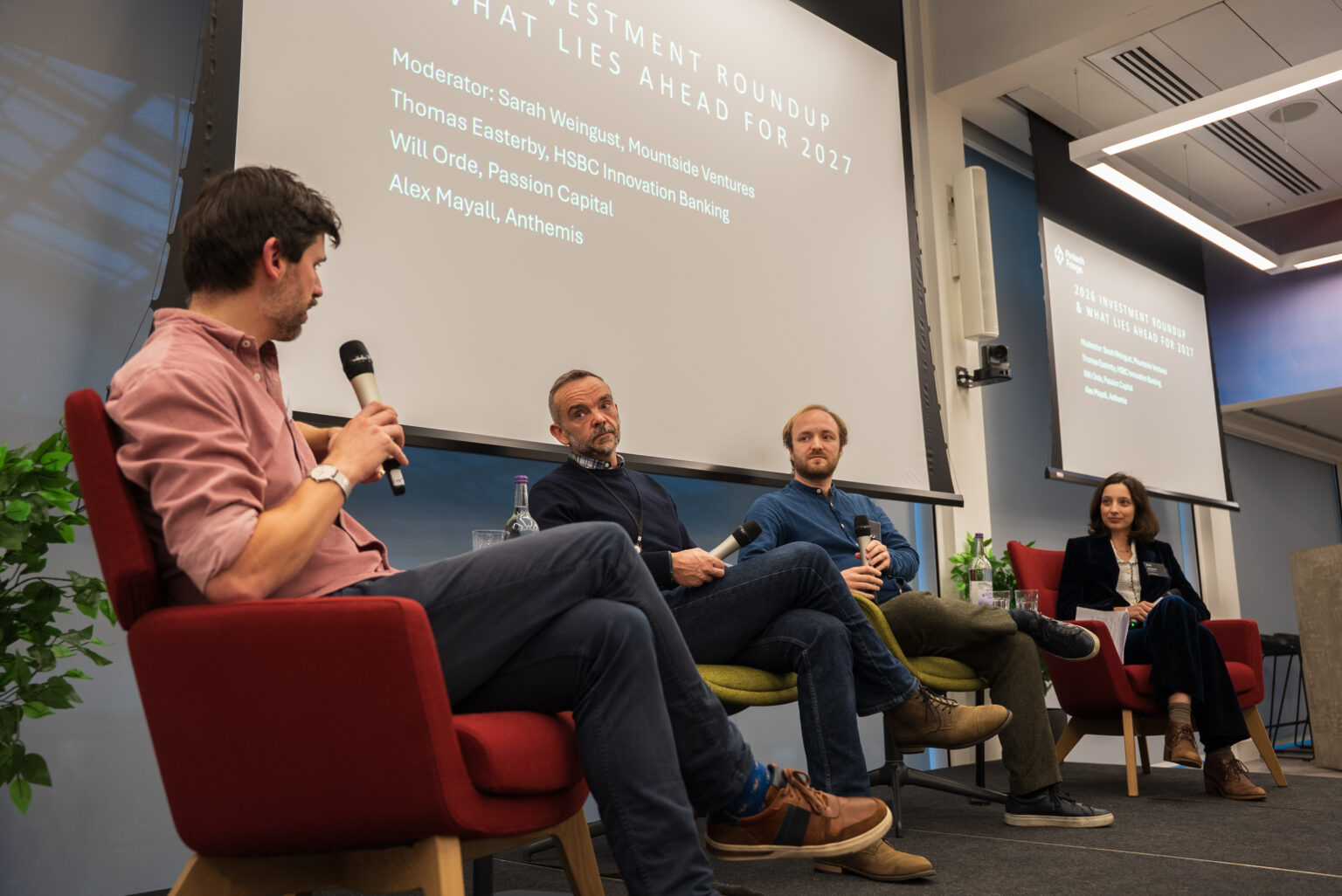
The backdrop was a mixed funding environment. Fintech has faced pressure while AI has attracted substantial investor attention. But the discussion challenged the idea that the two should be treated as entirely separate - or competing - categories.
AI is creating opportunities within financial services, from automating complex workflows to enabling new approaches to payments and financial infrastructure. For ambitious founders, the technology opens up problems that were previously too difficult or expensive to tackle.
The opportunity, however, is not simply to attach AI to an existing proposition. It is to demonstrate what becomes better for the customer.
The panel also explored how investment expectations change by stage. At pre-seed, investors may be underwriting the founding team and its vision. As businesses develop, product progress, customer evidence and commercial traction need to play a larger role.
A tougher fundraising environment does not necessarily mean lower valuations across the board, either. Investors can be cautious overall while competing intensely for the same smaller group of attractive businesses.
Preparation remains important. As AI increases the volume of questions and responses in diligence, a well-organised data room and clear, consistent information can help investors understand a business without creating unnecessary back-and-forth.
Trust was another recurring theme - particularly as AI agents become capable of taking actions within financial services.
“Whenever we talk about agents, we also talk about trust.”
That observation provided a natural bridge to the showcase, where several founders were tackling the controls, information and infrastructure required to make innovation usable.
Six fintech businesses tackling practical problems
The DealFlow LIVE Showcase brought those themes into focus through six businesses addressing challenges across payments, private markets, rewards and compliance. Their pitches and audience Q&As explored not just what they are building, but why existing approaches fall short.
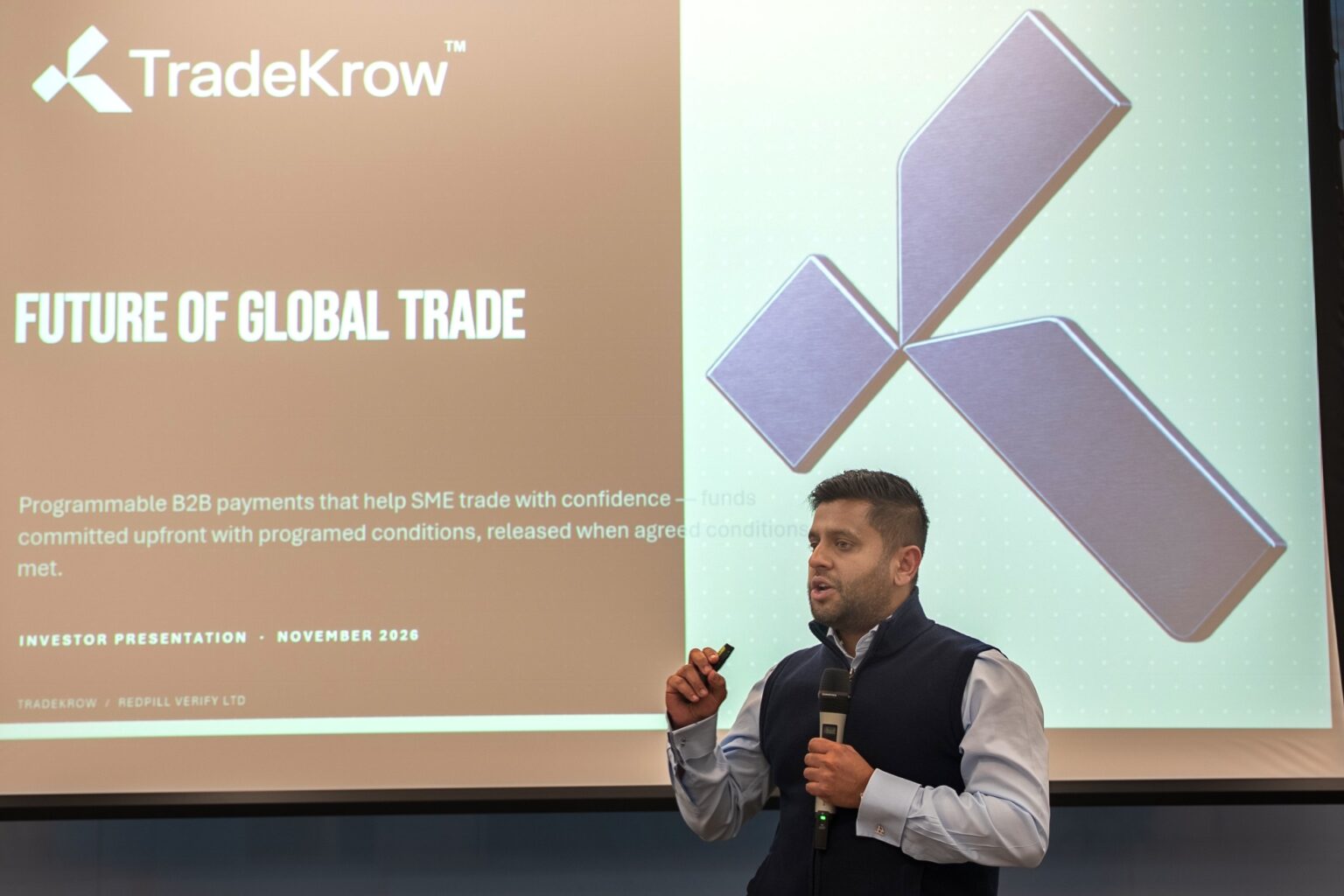
TradeKrow: bringing greater certainty to international trade
For a small business trading internationally, finding a new supplier is only part of the challenge. The harder question is whether it can trust that supplier enough to pay before receiving the goods - or, as a seller, ship before receiving payment.
TradeKrow presented an approach to programmable B2B payments built around conditions agreed between buyer and seller. Rather than starting with an account number, the journey starts with what each party needs to happen. Conditions are expressed in plain English, with payment released against supporting evidence such as shipping documents.
Initially targeting wholesalers and manufacturers, the business aims to reduce friction without simply replicating traditional escrow or letters of credit.
In the Q&A, Lealh explained how documentary conditions could help address concerns around shipment, quality and supplier non-performance, with arbitration available for disputes. He also distinguished the current proposition from longer-term financing ambitions:
“Today, we monetise the transaction, not the balance sheet. We are not lending.”
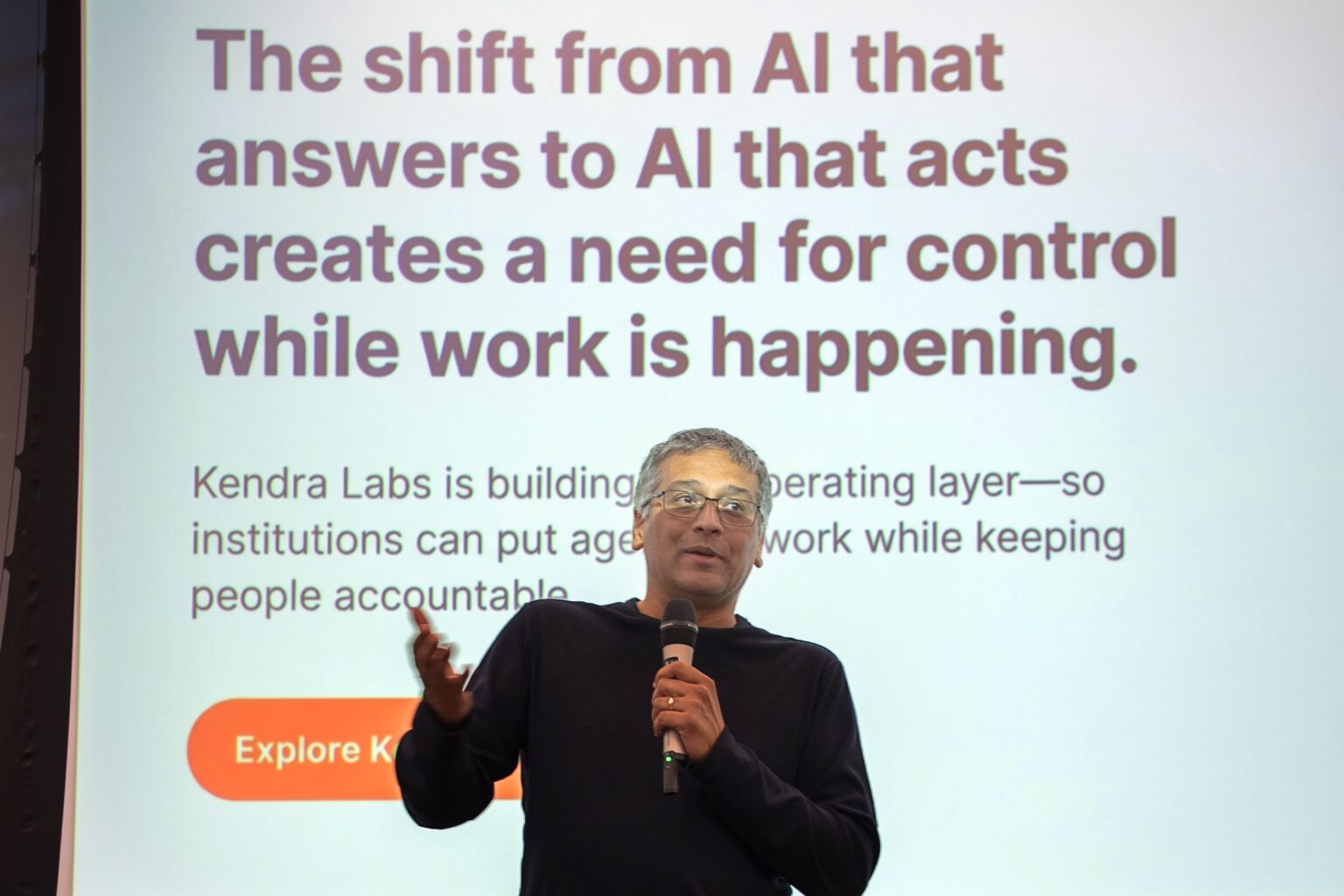
Kendra Labs: making AI agents governable at enterprise scale
Building an AI agent is one challenge. Getting it into production inside a regulated institution - and knowing what it is doing - is another.
Kendra Labs presented an enterprise platform designed to help organisations govern, monitor and scale AI agents. Doshi described a “system of record for AI”, intended to track agents’ activities, decisions and reasoning steps so that risk, compliance and audit teams can understand how an outcome was reached.
The approach includes agent identity and access controls, policies embedded into execution, and escalation to a human when defined limits are breached.
“It’s got to be governed and controlled and managed and audited.”
The Q&A also addressed the commercial realities of adoption. Doshi highlighted specific use cases, partnerships and cloud marketplaces as routes to customers, while acknowledging that larger institutional transformations can take years.
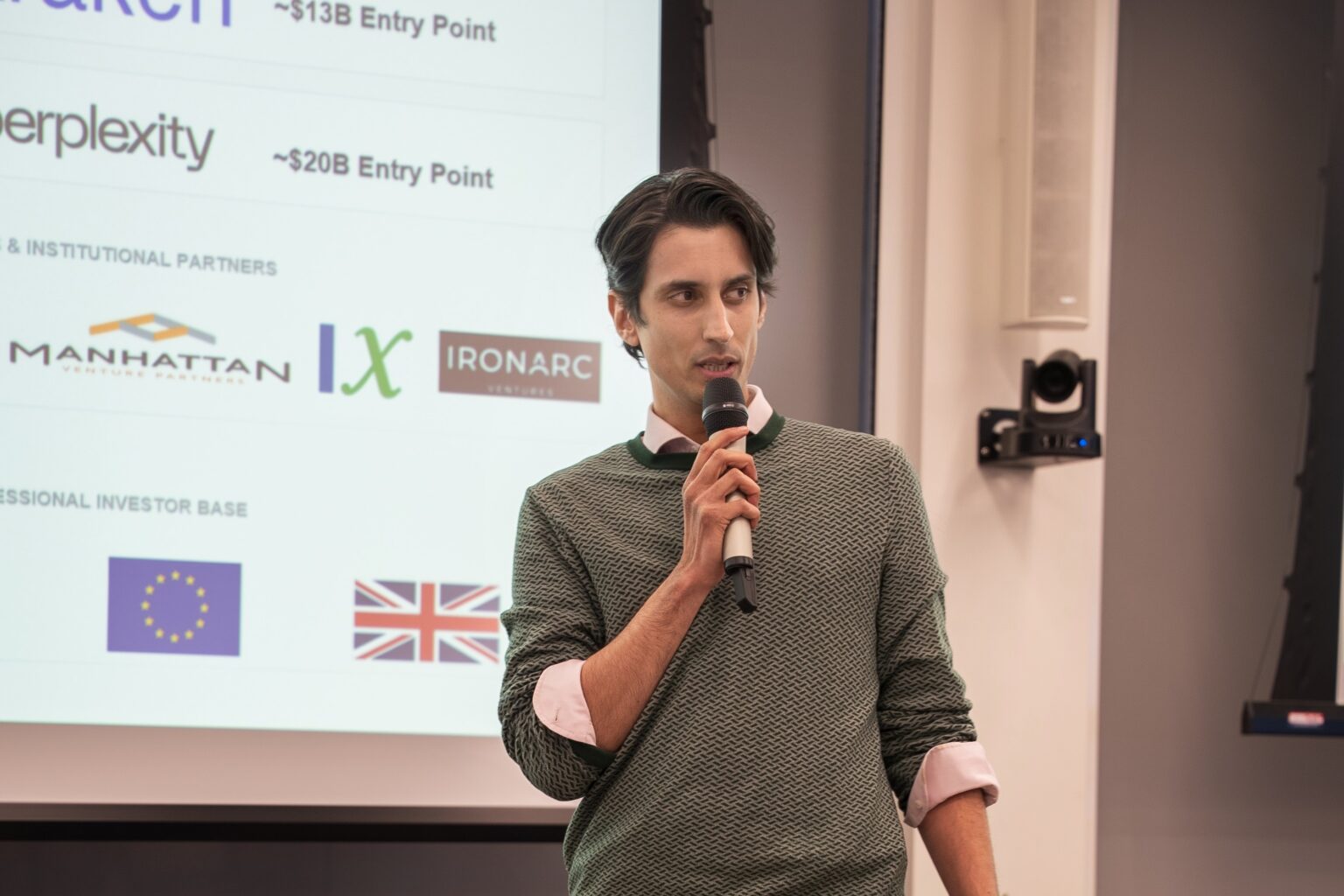
Mint Digital: reducing the friction of private-market investing
Buying public shares can take a few clicks. Accessing shares in private companies can involve brokers, layered investment structures, legal paperwork and lengthy transaction processes.
Mint Digital’s pitch focused on closing that infrastructure gap. Rafi described a Switzerland-based approach using digital securities and a regulated institutional partner to make private-market transactions more streamlined.
Crucially, the proposition was not simply about tokenising shares. It was about balancing investors’ desire for access and liquidity with private companies’ need to retain control over ownership and participation.
In the Q&A, Rafi emphasised that Mint is building infrastructure rather than selecting investments for its users:
“The final capital allocation decision always lies with the end investor and not us.”
The distinction placed the focus on improving how transactions happen, rather than promising investment outcomes.
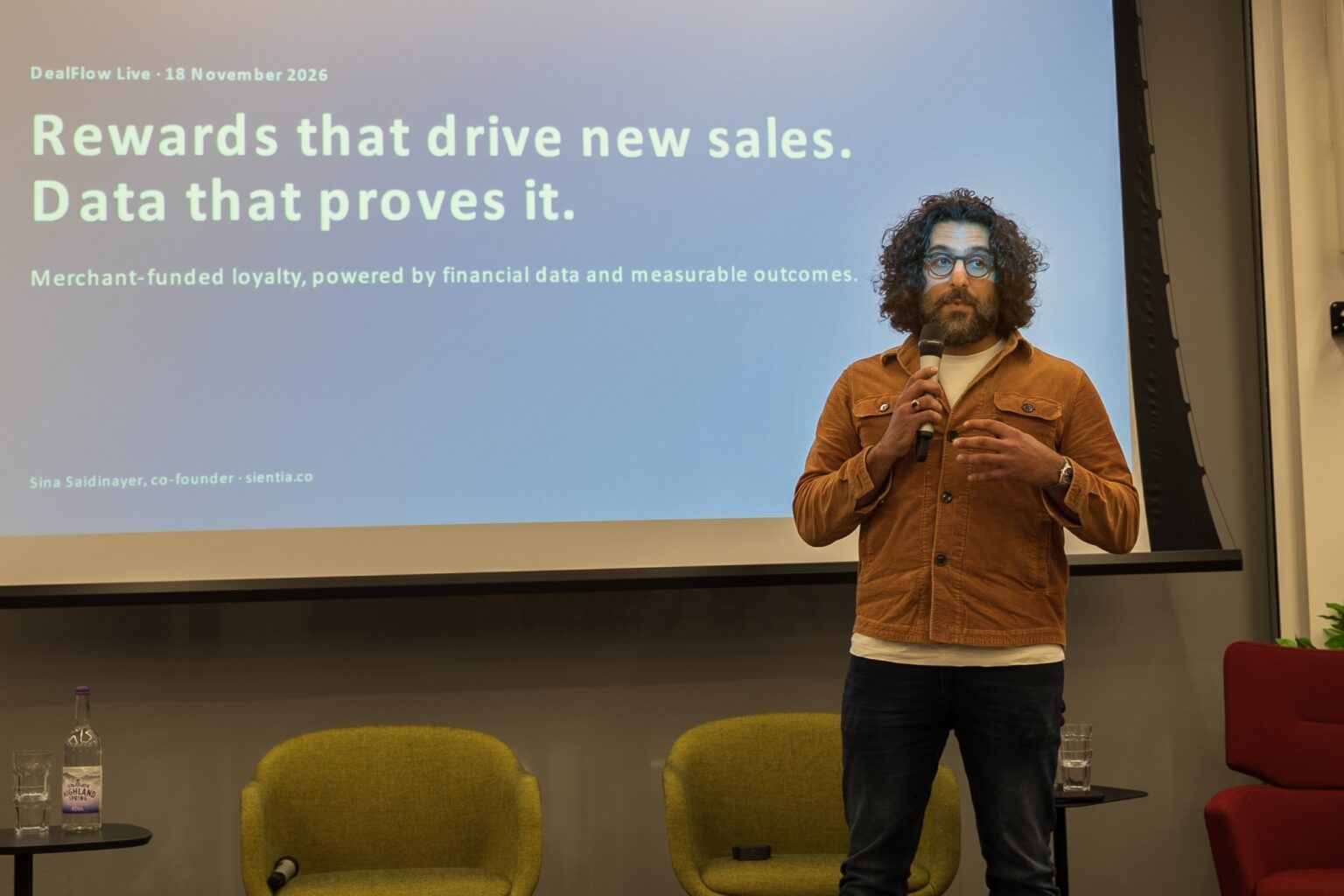
Sientia: showing whether rewards actually change customer behaviour
A cashback offer may generate a purchase - but would the customer have bought from that brand anyway?
That was the measurement problem at the heart of Sientia’s pitch. The business combines rewards infrastructure with an intelligence layer built on Open Banking and bank transaction data, aiming to help advertisers target customers more effectively and understand whether campaigns generate additional spending.
Saidinayer explained how looking across connected accounts can provide a fuller picture than relying on a single bank’s transaction data. The aim is to understand changes in spending behaviour, including whether customers continue buying after a campaign ends.
“We can actually show them how people have shifted behaviour, shifted spend.”
The team also brings experience from earlier ventures in loyalty and rewards, informing a proposition focused on helping brands understand what their marketing investment achieves.
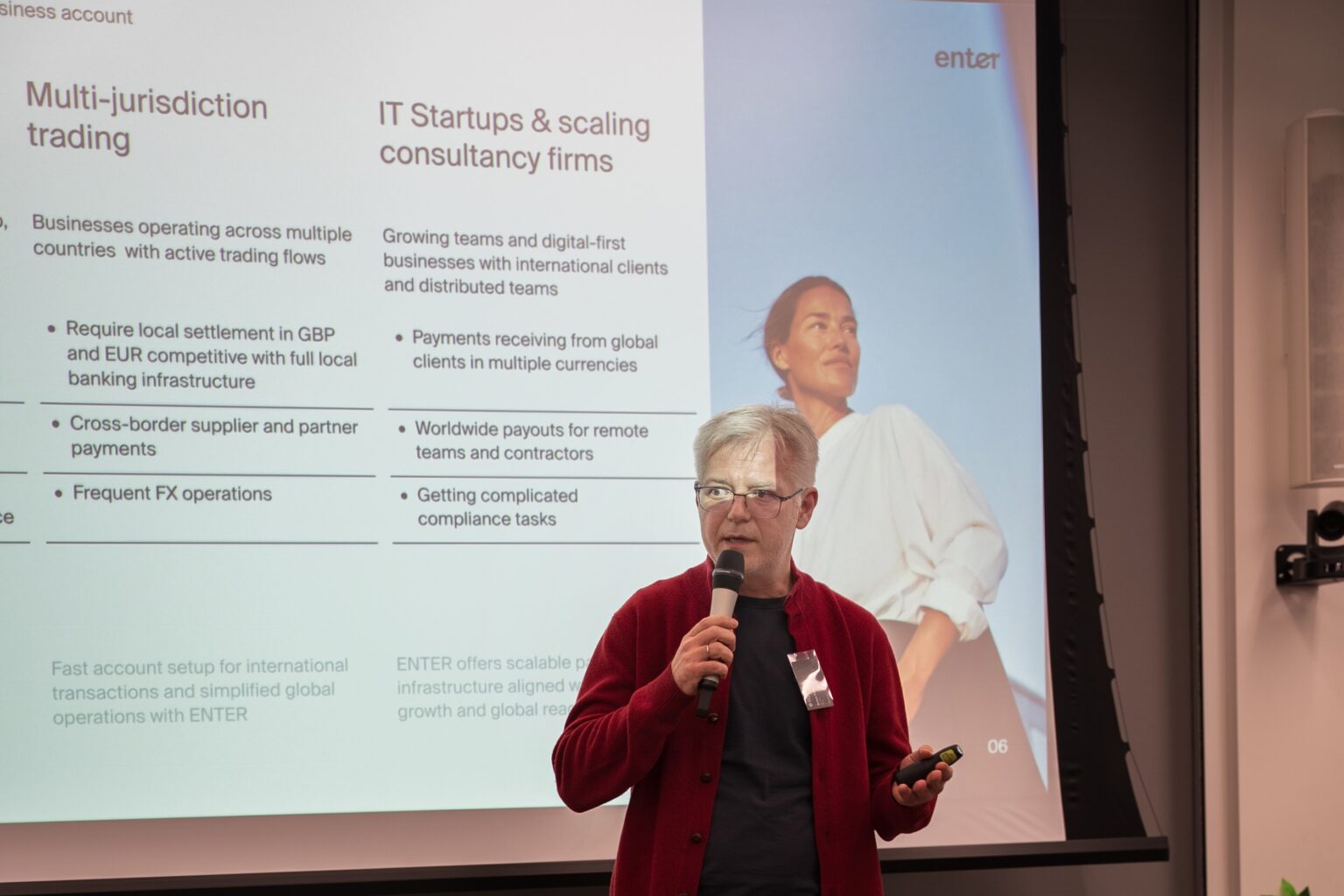
Enter: combining payments with the administration behind a business
For businesses with international transactions and complex ownership structures, accessing payments services can mean navigating multiple providers and repeated requests for company information.
Enter presented a model bringing payments, company administration and accounting services into a single online interface. Its focus is on SMEs whose cross-border activities or corporate structures can make them difficult to serve through more standardised propositions.
Asked why the business had spent several years building before scaling sales, Paleev pointed to the time required to establish the product, regulatory arrangements and correspondent banking infrastructure.
His argument was that accelerating sales before the underlying economics and infrastructure work risks scaling losses rather than building a sustainable business. It was a practical example of a theme running through the afternoon: growth needs foundations that can support it.
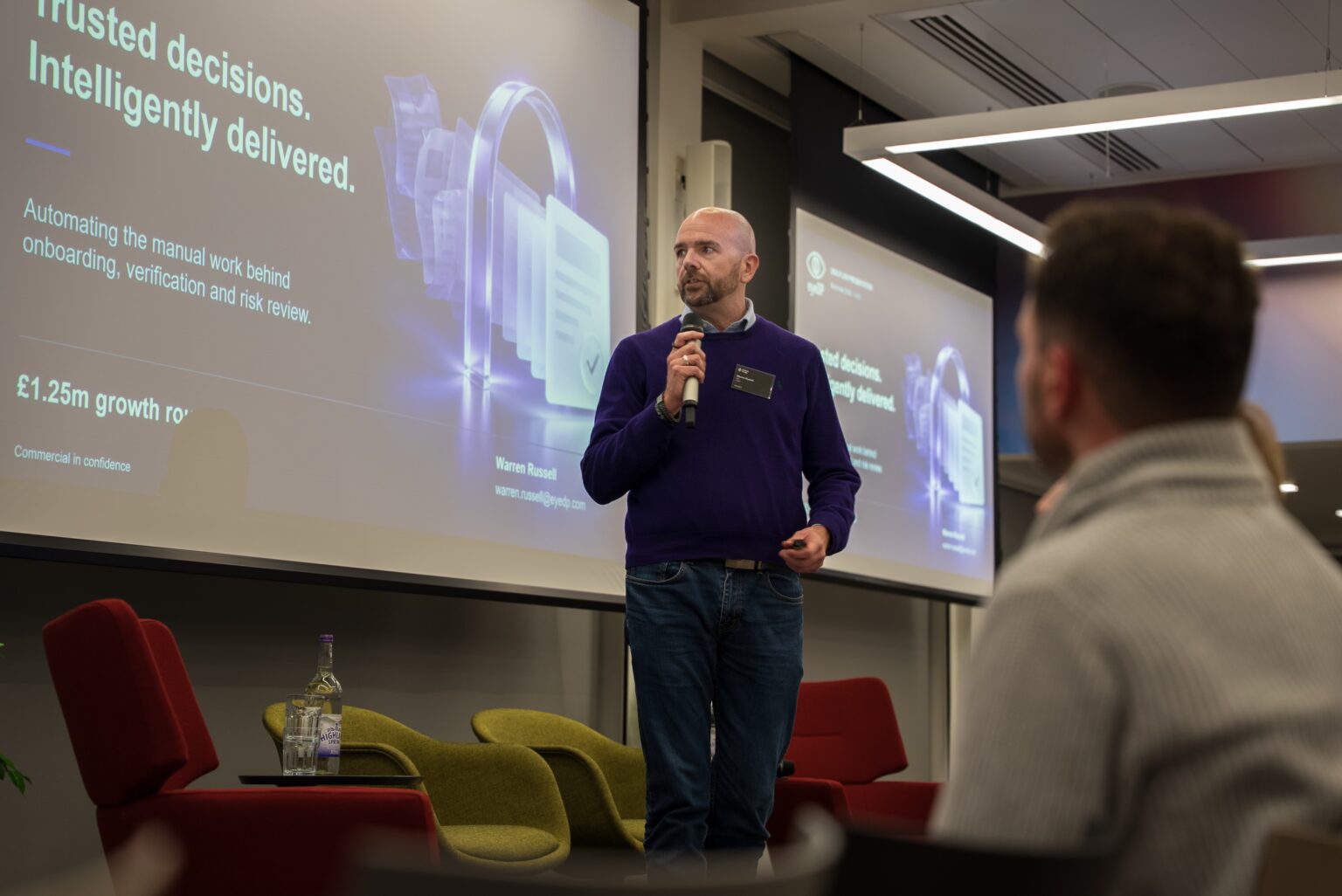
eyeDP: tackling the difficult cases in customer onboarding
Many onboarding tools are designed to move straightforward customers through quickly. eyeDP is focused on the more difficult cases - the customers whose documents and circumstances require additional investigation and manual work.
Russell described a platform that checks documents, validates their contents and cross-references information across documents and external data sources. One example was checking whether salary payments on a bank statement match the income shown on a payslip.
Challenged on why a business could not simply use a general-purpose AI tool, Russell emphasised the need for predictable, reliable and explainable processes in regulated environments.
“We’re accelerating the process to enable your people to get to the decision quicker.”
The platform’s current role is to support analysts rather than remove human accountability. Russell also outlined plans for an AI assistant to guide users through relevant information and potential next steps.
A common thread: reducing cost, delay and uncertainty
Across the six pitches, a consistent theme emerged: innovation is not only about creating new financial products. It is also about improving the infrastructure, information and controls that allow transactions to happen.
Whether the challenge was trusting a supplier, governing an AI agent or verifying a customer’s documents, the businesses were tackling points where complexity creates cost, delay or uncertainty.
Their presentations also reflected the investment discussion that preceded them. Ambition matters, but so does explaining the customer problem, understanding the route to market and showing how the proposition can work in practice.
Relationships beyond the pitch
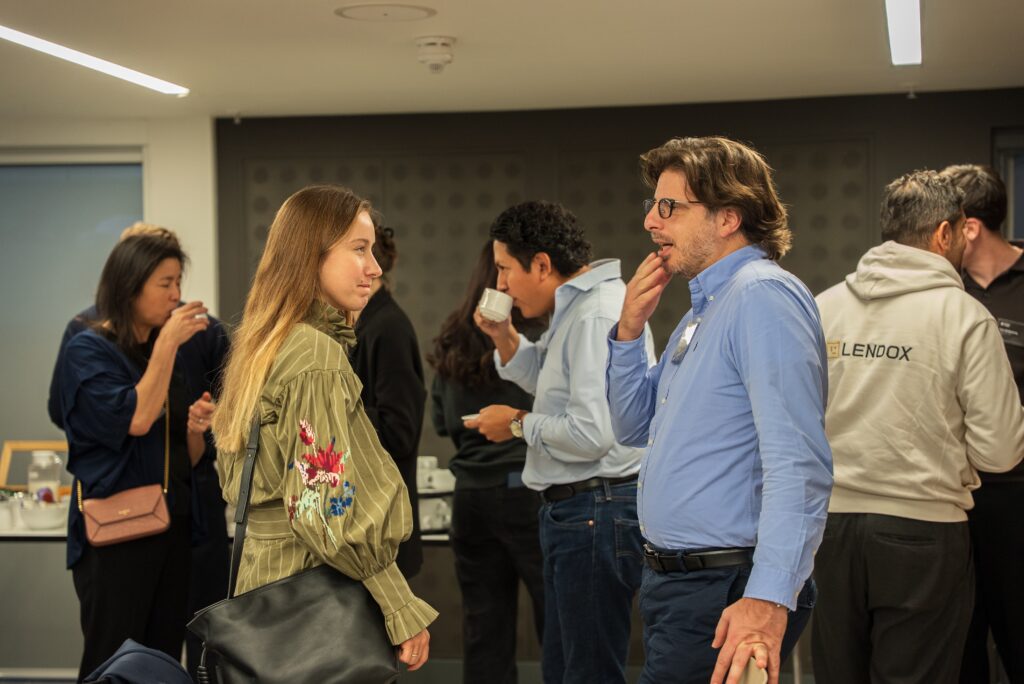
The afternoon concluded with networking drinks, giving founders, investors and partners the opportunity to continue their conversations beyond the stage.
That is the purpose of DealFlow LIVE: not simply to showcase businesses, but to create opportunities for the relationships that support their next stage of growth.
Thank you to HSBC Innovation Banking, HaysMac, Mountside Ventures, our investors, panellists and all six showcasing companies for contributing to the afternoon.
We look forward to returning in 2027 with a new series to support companies with their fundraising. Check our calendar for 2027 dates.
Photos
More from DealFlow LIVE