Event recap · June 2024
Ding, ding, round two! Another knockout during London Tech Week.
What an incredible four days at the Fintech Fringe Festival this year. We brought together the brightest minds in fintech to explore, innovate, and collaborate on the future of financial technology. No fluff, no BS, just actionable insights was our aim and, based on feedback, we hit the mark!
Our aim as ever is to deliver practical and pragmatic insights to support scaling fintechs both in the UK and from abroad. Continuing to deliver support to companies on their growth journey will ensure that we can maximise our potential to drive innovation globally.
Thank you to all the speakers, sponsors, and attendees for making this event unforgettable!
Calypso, Founder
In numbers
Fintech Fringe Festival 2024 in numbers
Over four days at London Tech Week we ran six conferences, a matchmaking event, a comedy night and a big industry party, and sold 1,014 tickets.
Festival roundup
Four days, four themes
Day 1
Scaling strategies
Day 1 kicked off the festival by focusing on growth strategies for fintech firms. Looking at industry trends to jump at, new geographies and customers to target and talent.
Day 2
Supercharging sales
Day 2 began at Level39 in Canary Wharf, and was powered by NTT Data. With major banks in attendance, attendees learned how to engage with big FIs.
Day 3
Product & tech / marketing
Day 3 was focused on Product & Marketing. We kicked off with CMO of Thought Machine, Travers Clarke-Walker who shared what it takes to build a billion dollar fintech.
Day 4
Regulation / fundraising
Day 4 was all about the fundamentals. Helping fintechs navigate raising funds and making sure their business is safe to scale through vigilant compliance.
The festival in depth
Day 1: growth, growth, growth
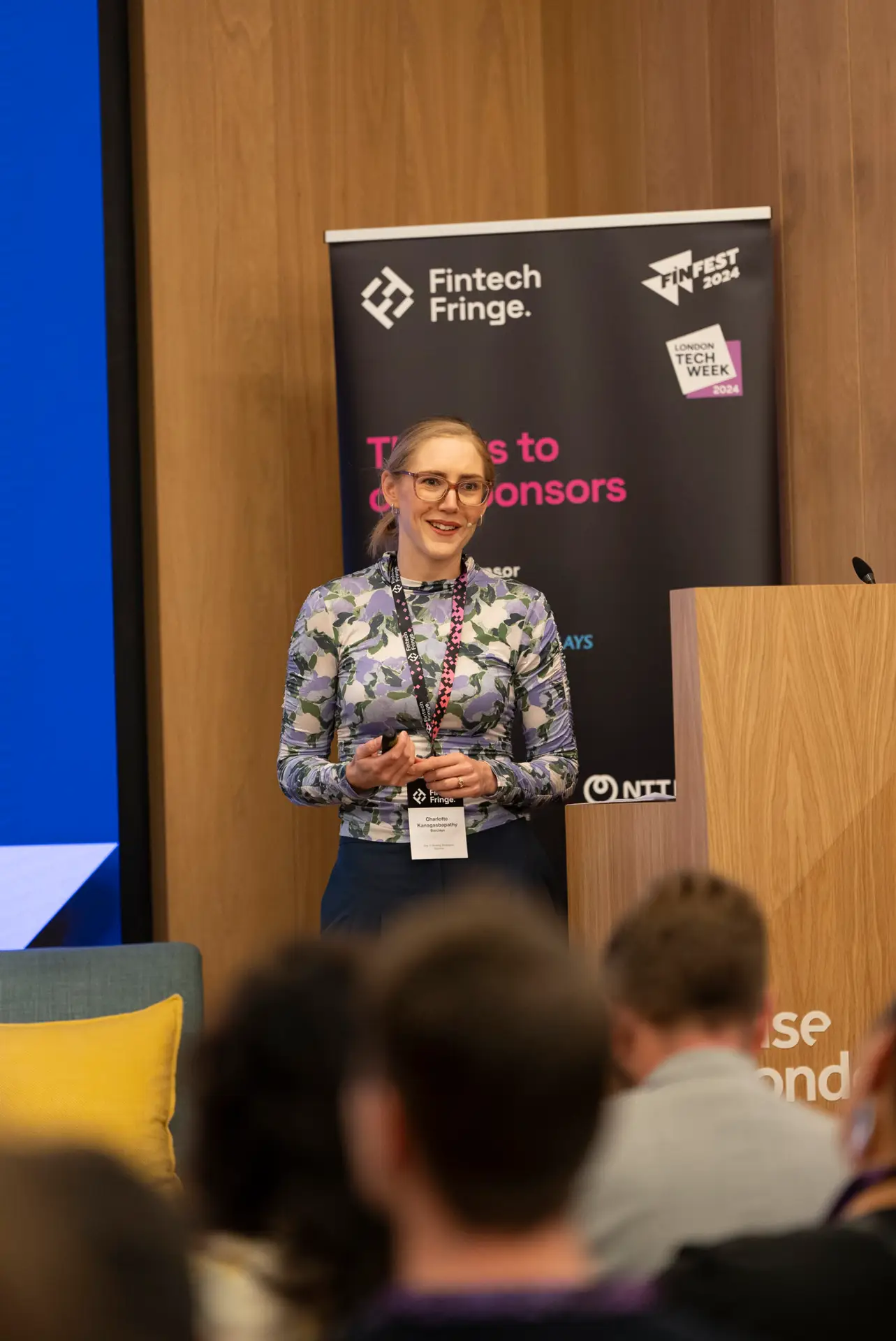
The festival kicked off focusing on growth strategies for fintech firms. Charlotte Kanagasabapathy, Fintech Scouting Director at our Platinum Sponsor, Barclays, delivered an inspiring keynote on strategic opportunities and emerging trends in the fintech ecosystem. “Nearly 80 percent of Venture Capital was focused on AI [in 2023]” certainly made the fintech founders in the audience sit upright with shock!
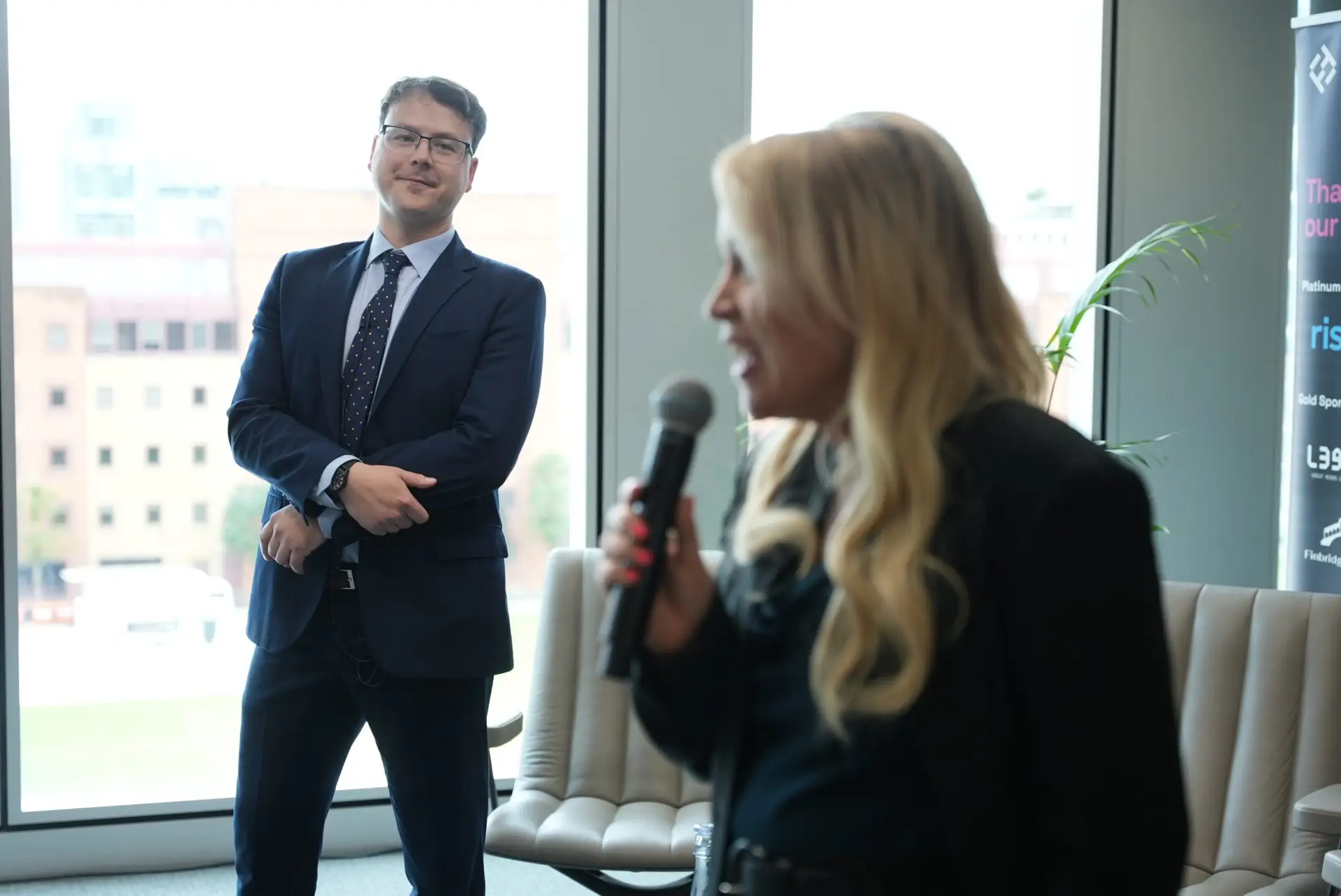
A huge thank you to Julia Streets for being the star MC and to Rise, created by Barclays, for without them, this day would not have been possible.
The new Sheriff of Nottingham
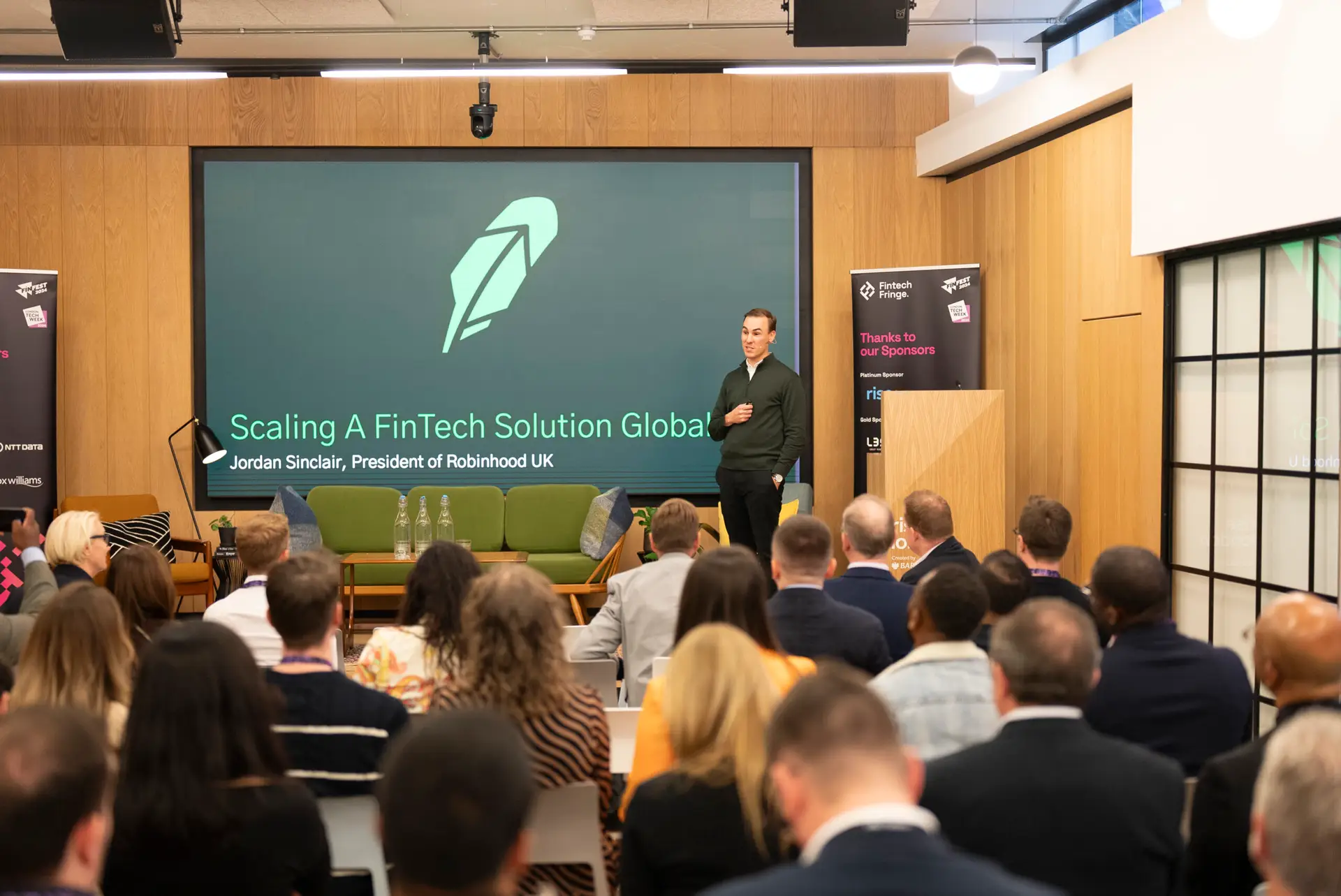
Jordan Sinclair, President of Robinhood, followed with game-changing insights on expanding and scaling fintech solutions globally. His address underscored the importance of strategic growth and adapting to diverse market conditions. Sinclair underpinned how their platform was primed for growth compared to other investment platforms by a focus on diversity with “one third of our customers are female”. His keynote was really focused on building these foundations when starting out in a new market, “we recognise the other platforms out there, but we don’t see those platforms meet those [customer] needs”. This was highlighted by the fact that Sinclair himself has “seven different investment apps” each one to solve a different issue, he believes that Robinhood UK will be the app to change that.
Time to learn your ES&G’s
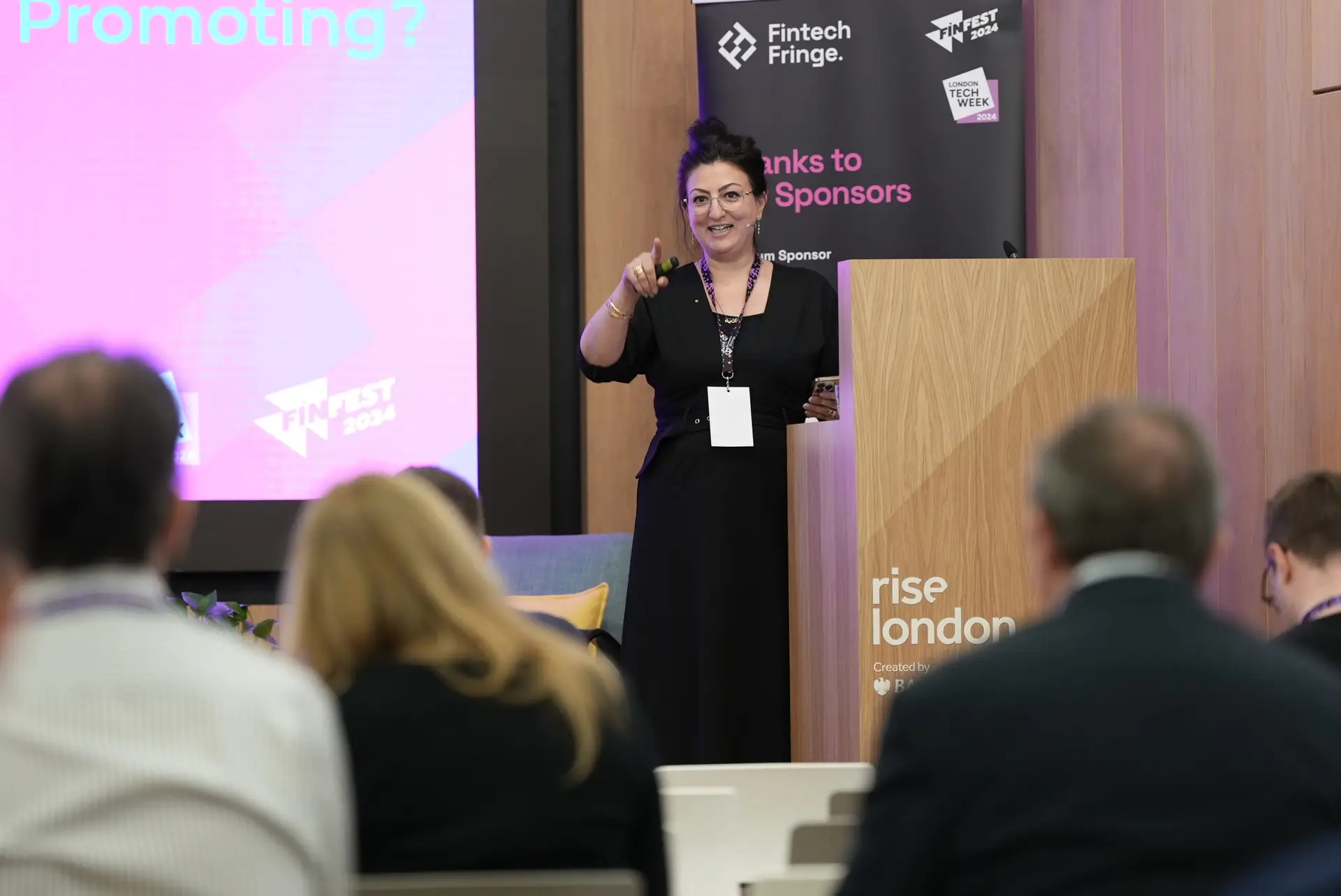
A critical panel when it comes to fintech growth, is tapping into underserved markets. We’ve seen that with the SME lending Unicorns, the investment platforms like Robinhood and so the audience were desperate to hear from our panel where the next one would be. Experts Devina Paul, CFO & Deputy CEO at Zumo, Joanne Dewar, Lead at Project Nemo, Jordan Bishop, Head of at Currensea & BuildMyCredit and moderated by David Beer, Global Head of Enterprise Solutions & Partnerships at Cogo, each brought an element of the E, S and G that traditional finance had been missing.
Devina Paul’s Zumo is a key organisation when it comes to offering regulated and green crypto elements – fulfilling both the E(nvironment) and G(overnance). For the S(ocial) Project Nemo has been asking the fintech industry to fulfil its promise of financial inclusion by adding inclusivity to products. BuildMyCredit has been critical in allowing the new generation to build their credit now that mortgages are beyond the reach of many.
Pivot! Pivot!
Another stellar panel was ‘Breaking Borders’ – our session on how to expand abroad. The line up featured Stuart Barclay, SVP Growth at Volt, Chloe Wade, VP International Financial Services UK at IDA Ireland, Maisie Richardson, VP of Demand Generation at Payhawk, and Caroline Vaughan, VP Financial Services at Pangea. The panel was refreshingly candid for a fintech conference and they didn’t hold back when describing just how difficult expanding abroad could be. “Be flexible, keep making the next sensible decision at every stage and being able to pivot is key” Barclay urged the audience after admonishing himself for a small mistake during one of their expansions.
Maisie Richardson gave some incredibly sage advice: “The biggest cheat code is having a close alignment between sales and marketing.” When the two departments are aligned with the sales team being “the first line of defence” the organisation can navigate the huge changes needed when scaling abroad.
The productivity crisis
Nadia Edwards-Dashti, Chief Customer Officer at Harrington Starr Group, concluded the day with her take on the candidate vs. job capacity reality and strategies for retaining high-performing teams in fintech. When you think of scale, you have to be brave as an individual, you can’t get everything right. Edwards-Dashti urged fintechs to look at providing “the backing to learn, the backing to fail and fail fast.” She argued that this would ultimately lead to talent optimisation, as it’s not just about hiring talent but about retaining your hires that can ultimately lead to growth. This way you aren’t starting from square one again and again! “How many places of work have you felt comfortable with being able to fail?” Something all fintech organisations should take a good hard look at themselves and have a think about.
Day 2: supercharging sales
Day 2 began at Level39, and was powered by NTT Data, two organisations that underpin a sense of scale. With the venue offering attendees breath-taking views of London in their giant meet up space, there could not have been a more dramatic sense of sales and making money than being in the financial landmark that is Canary Wharf.
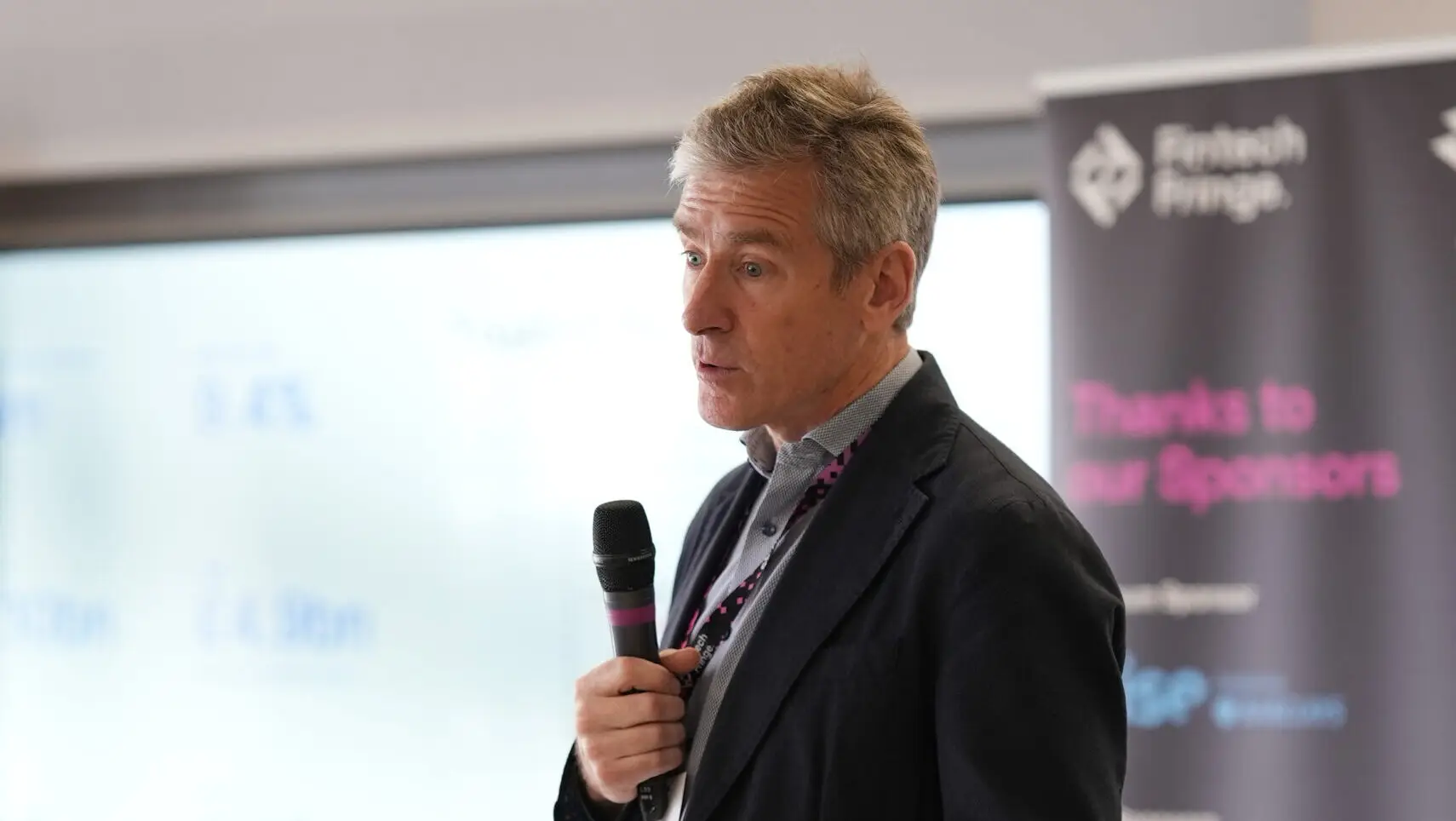
To lead proceedings, Nick Drewett, CCO of Engine by Starling, opened the day by sharing how their enterprise solution was gaining scale and success in the UK and abroad. He emphasised the courage of the leadership and also the fact that from a talent perspective they had placed engineers in decision-making roles throughout the company. “Most people in Starling Bank understand engineering, I’m often fascinated to the extent to which it’s run by engineers, not just in engineering.”
Rewriting the book
A panel discussion on changing your product offering (sometimes completely) to supercharge sales featured David McHenry, Head of Product Advisory & Implementation at HSBC Innovation Banking, Alexandra Rivas-Gale, Head of Product at ClearBank, and Adam Moulson, COO of Griffin. Moderated by Matt Williamson, SVP at Endava, the panel highlighted the importance of aligning products with evolving customer needs, especially in a B2B context.
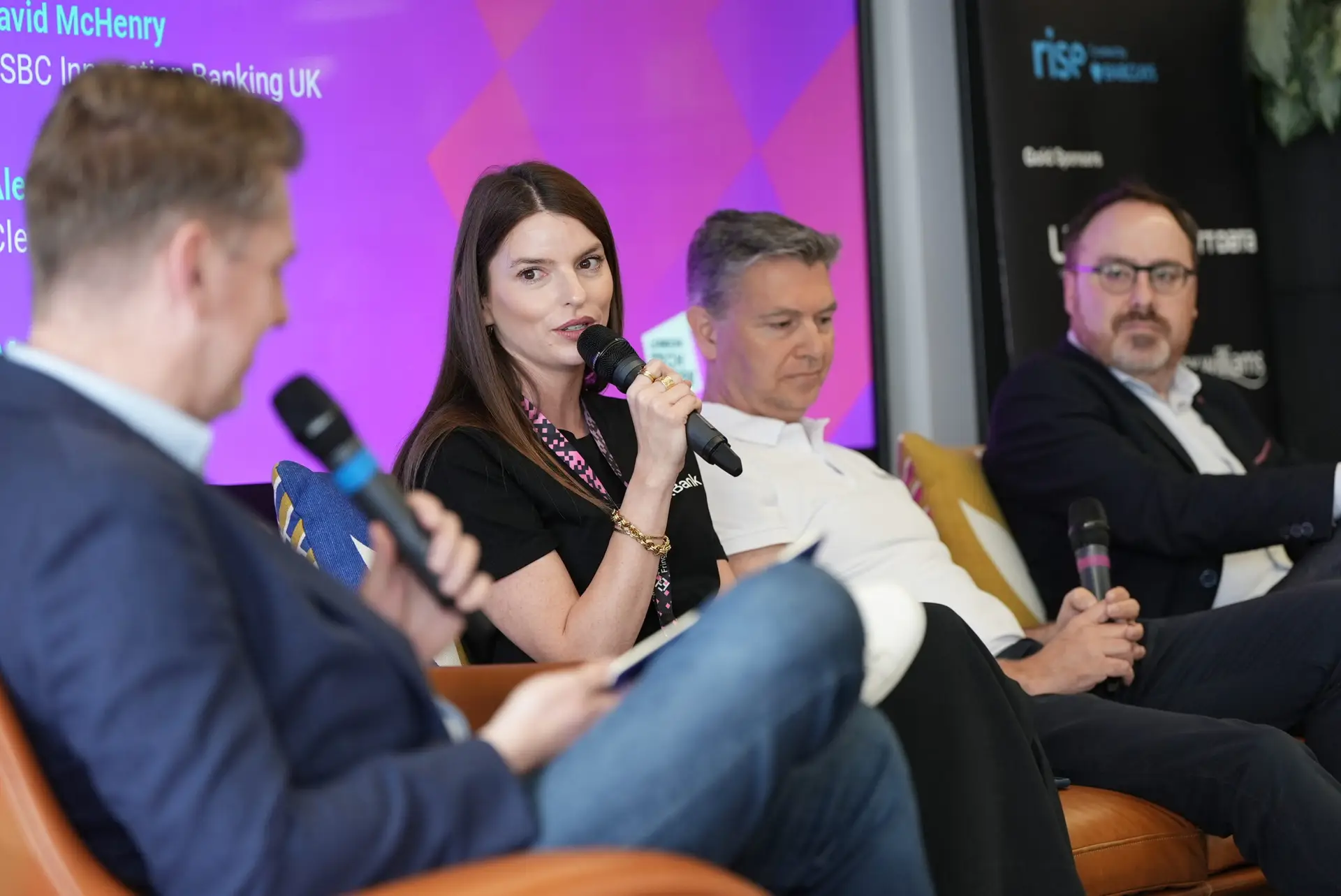
With such long sales cycles in finance, Rivas-Gale brought up the interactive nature of partnerships when the product is pivoting: “we educate our customers and get their buy in up front.” David McHenry saw it as an evolution, not just of product but of the partnership itself: “How are you going to evolve with your client?”
Growth vs profitability
The next session was a more unusual look at increasing sales for the fintech industry as it looked at profitability rather than just growth. It was moderated by David Wallace of David and Dharm Demystify, featuring Susana Ponce Froment of Tide, Valentina Kristensen of OakNorth, and David Treacy of OpenPayd.
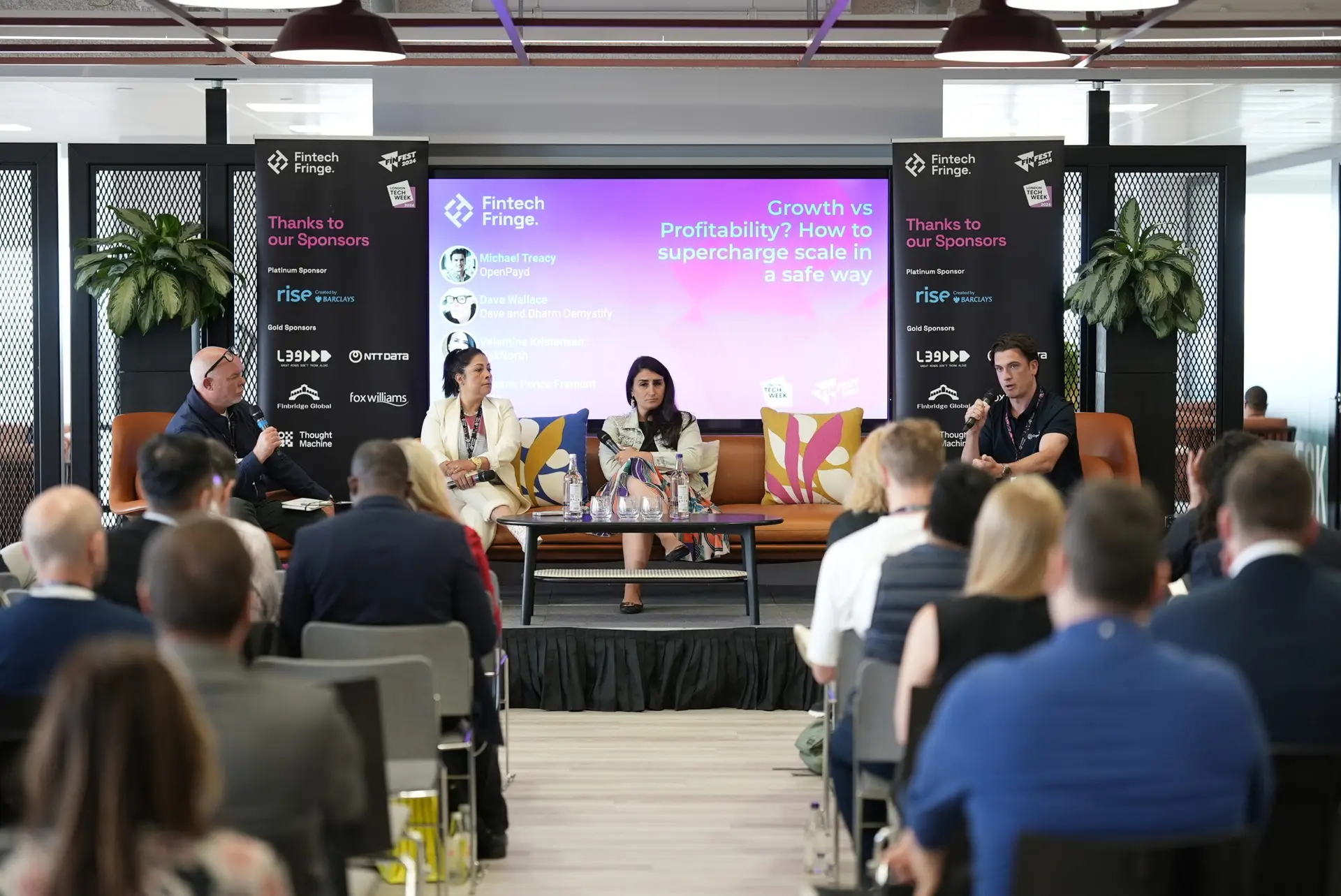
While it seems incredible that profitability still evades a large portion of the industry, this panel was made up of organisations that had long since achieved it. It was from their successes our audience were here to learn. Looking back on the fintech ecosystem 18 months ago, Kristensen remarked that “Revenue is vanity, Profit is sanity” and that “investors were focused on growth at all costs!” In an interesting riff on the previous panel, Susana Ponce Froment urged against how “new products could cannibalise your own products”.
Tech giants: are they the new banks?!
A panel on B2B scaling strategies included insights from Danny Keating of JD Consulting, Himal Makwana of FIS, Maeve Heneghan of Amazon Web Services (AWS), and Tom Bentley of NatWest Boxed. They discussed the crucial role of partnerships with tier 1 organisations, like AWS and FIs, in scaling businesses and navigating procurement challenges.
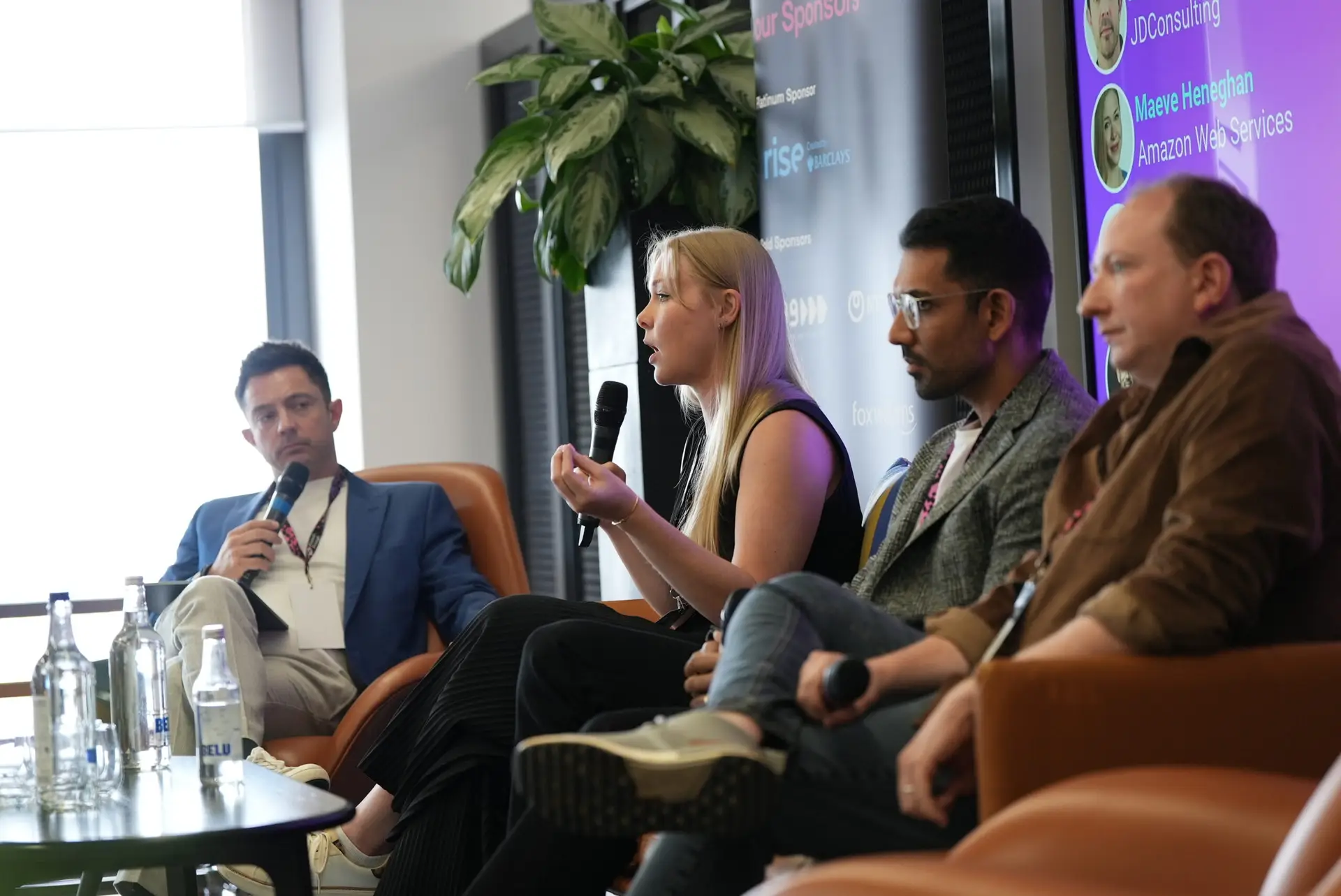
Himal Makwana underlined the importance of due diligence: “Can you trust that this company that you are partnering with is going to stick around for how long you are?” “There is no quick win here”. To add a cheeky event review, Tom Bentley remarked on the conference itself, saying how “unusual it was for a fintech conference to have a strict sales focus” and how “he loved it!”
The proof is in the pudding
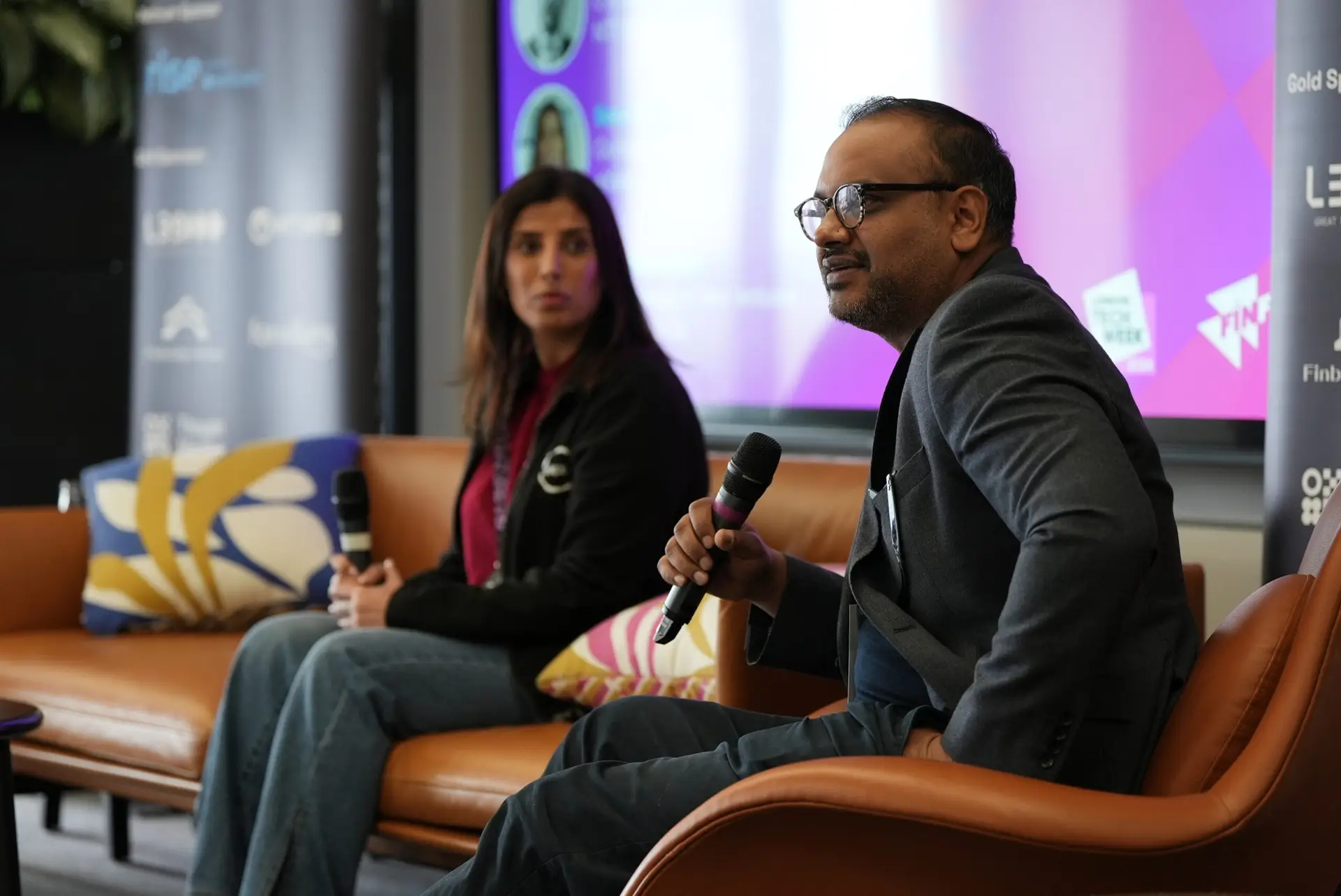
Our morning ended with a critical fireside chat with NTT DATA and eXate that provided a case study to every session that had gone before it: how to engage with a large-scale institution and make a partnership work. Tom Winstanley of NTT DATA, Sonal Rattan of eXate, and Sumant Kumar of NTT DATA shared their collaborative journey and explored their successful partnership, focusing on enhancing data privacy and security in the fintech sector.
That’s not all, folks… Funtech evening!
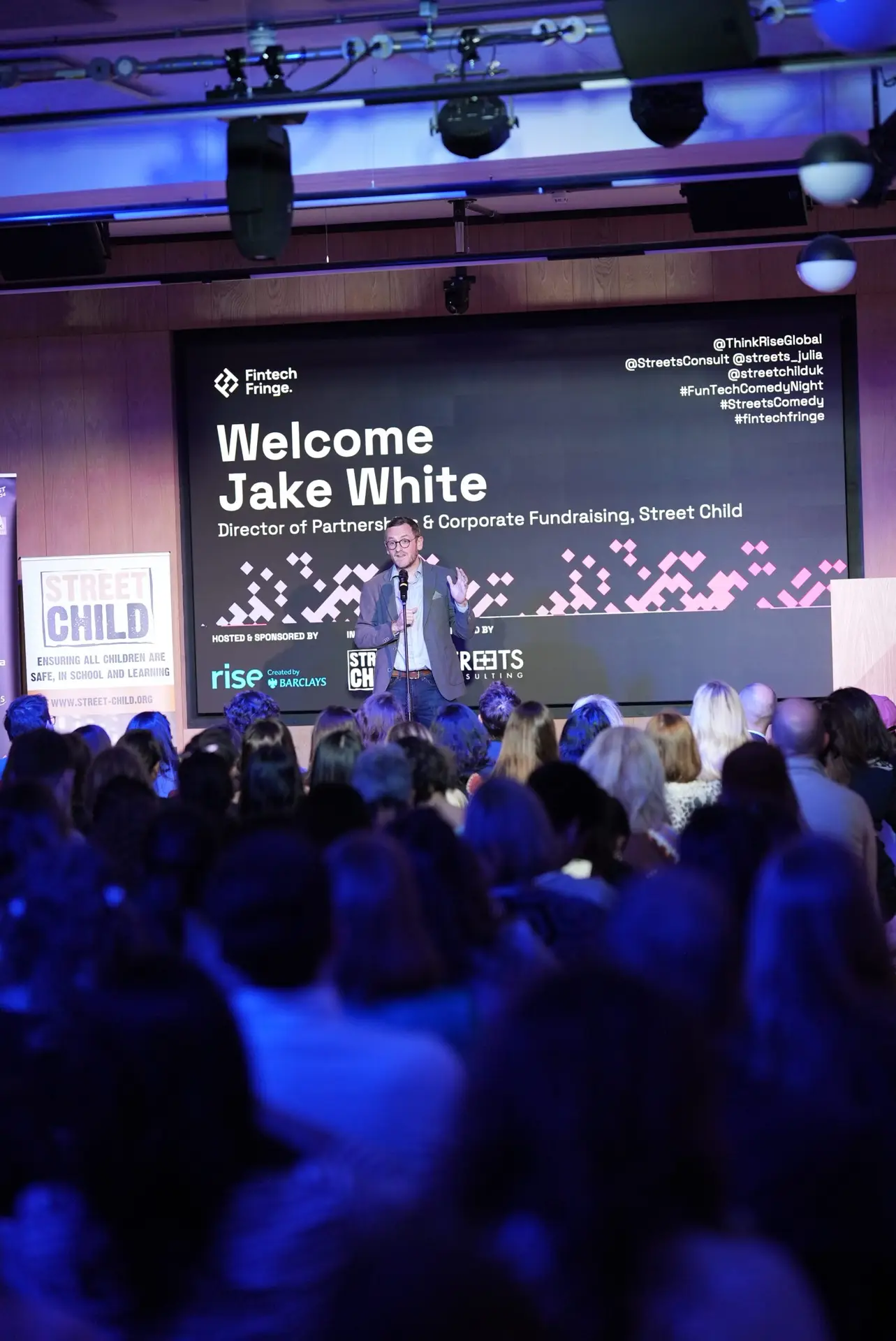
It wouldn’t be a Fringe event without a comedy night, and Rise, created by Barclays was the perfect place to host it! On the second night, to a jam-packed crowd, Calypso Harland and Julia Streets kicked us off with a very warm welcome to both Fintech Fringe and the Comedy Night.
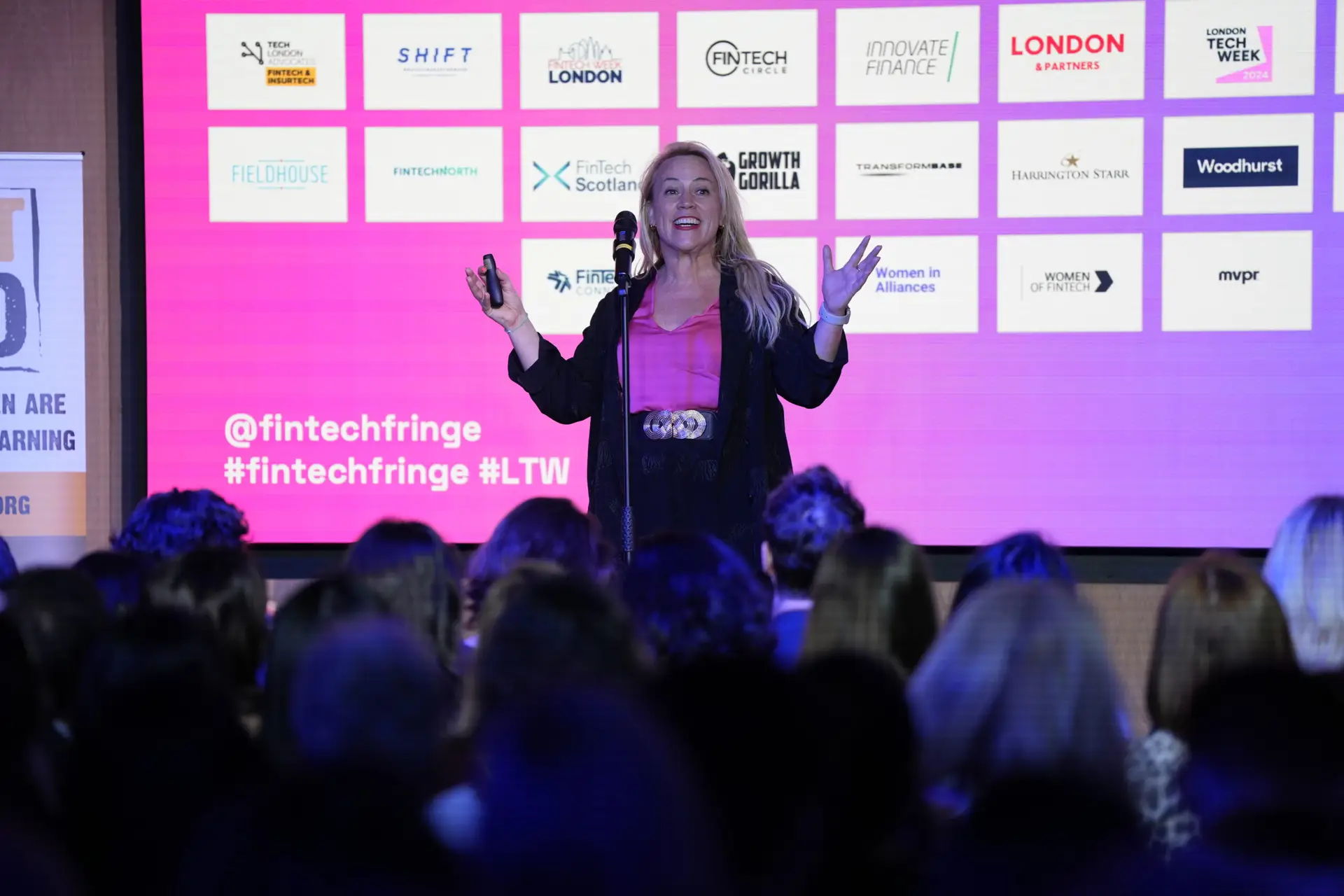
Following on from our MCs, Jake White, Head of Partnerships at Street Child, underscored why the night was so important. Street Child is a charity dedicated to changing the world, one child at a time, by giving the basic human right of education to some of the most vulnerable and impoverished people in the world. What made his brief speech stand out amongst the stand-ups was just how little you had to contribute to make a big difference: for less than £100 your contribution would put a child through school for the year. In total, because of Street Child, 412,161 children have benefited from improvements to the quality of education provision, 807 schools have been supported through construction or renovation, and 512 temporary learning spaces have been constructed in emergency contexts.
Then came the comedians. Abigoliah Schamaun was amazing at highlighting the differences between Americans and Brits as she slowly finds herself succumbing to the better (British) way of life. Josh James brought the cheeky Essex charm to the East End. Toussaint Douglas highlighted in the most absurdist way how difficult dads find it to connect with their kin. And Laura Lexx was brilliant in dismantling the allure of love handles. Four incredible comedians, six if we include ChatGPT and Julia Streets; you had to be there… and money going to an incredible cause.
Day 3: product & tech and growth marketing
For Day 3, hosted at the fantastic Thought Machine HQ, we looked at two pillars on which you can build a robust, high-growth yet reliable fintech: product and marketing. There were so many incredible discussions we can’t even fit them all in here!
Building a multi-billion dollar fintech
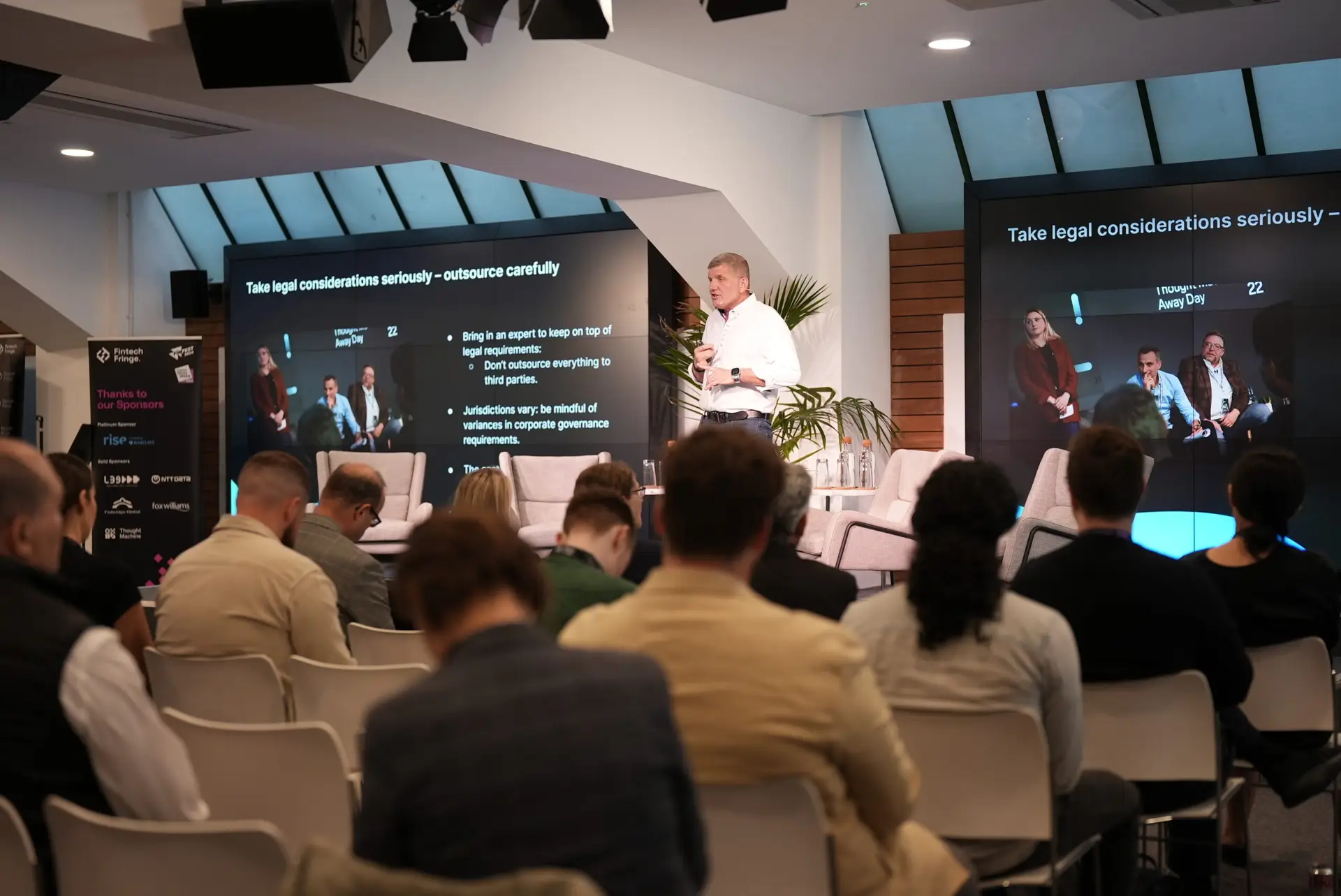
Travers Clarke-Walker, CMO, previously the CCO of Thought Machine and one of its early employees, opened the event sharing his insights on how to build a multi-billion dollar fintech company. His insights into deal structuring, stakeholder identification, and international challenges were invaluable. While admitting that keeping things simple is critical when scaling, Clarke-Walker asked: “Why go international at all? You are going to need to internationalise as single markets just aren’t big enough.”

Thriving under pressure
After our Gold Sponsor’s opening keynote, a fireside chat with Andrew McKibben, Head of International Technology at Bank of America, and Elizabeth Lumley, Deputy Editor at The Banker, highlighted the hurdles banks face when working with fintechs, and how the traditional power dynamics between fintechs and banks are not always as they seem. On the war for talent, McKibben said: “It’s not easy, but the banks offer scale, resources and solving really complex problems on a big global scale. We spend $12 Billion Dollars on tech.”
How do you fix what isn’t broke?
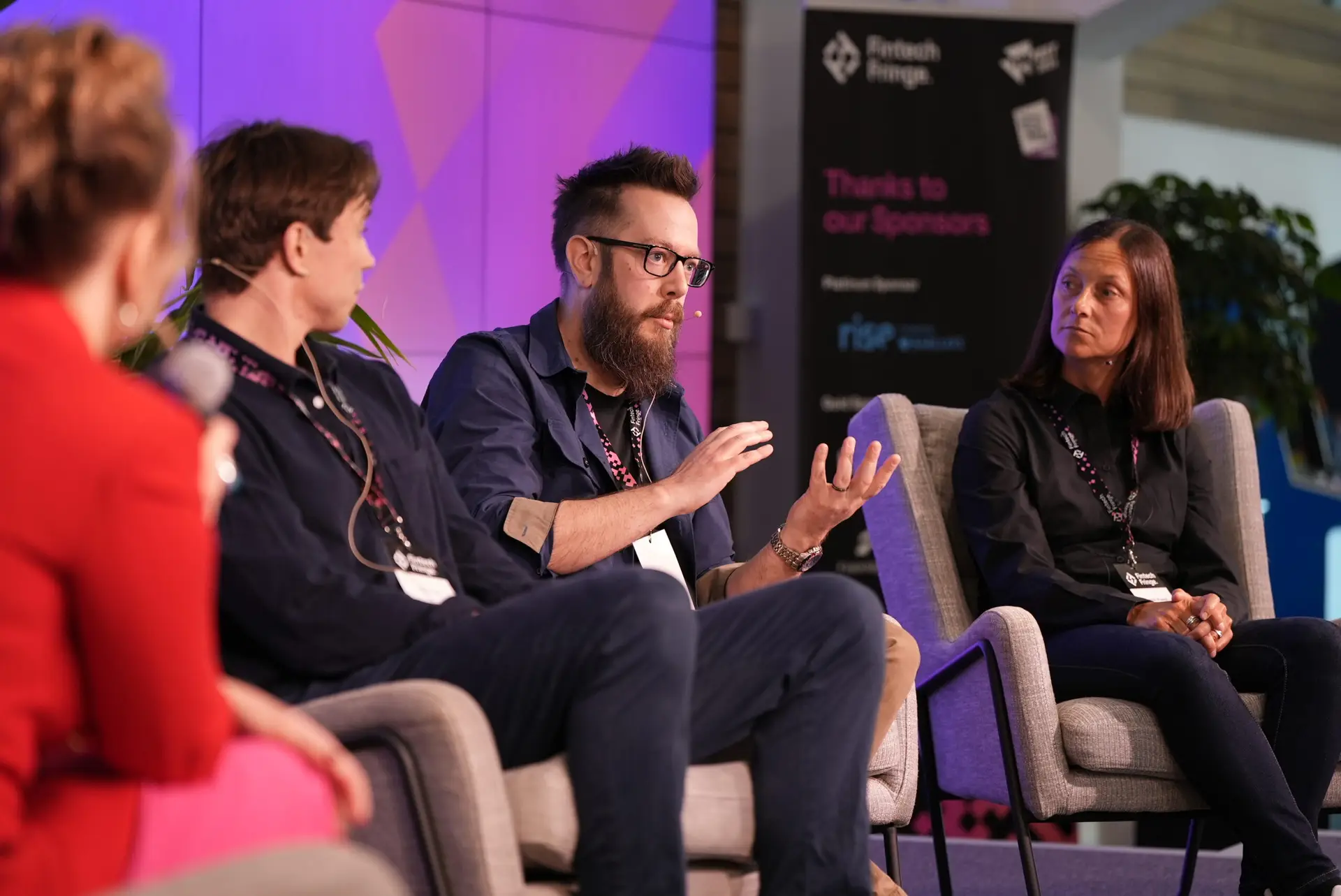
A panel on stability and resilience featured Alina Timofeeva, Lee Provoost of Flagstone, Tamsin Powell of Creditspring, Dave Starling of NatWest Group, and Jake Figg of mmob. They discussed building scalable but sustainable tech infrastructure, using cloud technologies, and ensuring service quality during growth. Figg highlighted the human element: “bringing in a team atmosphere is so important. Achieving outcomes that are harmonious across teams is so important. From my perspective that is about engendering an atmosphere where people aren’t afraid to make mistakes.” Starling added that organisations even have to ask “do you have a disease outbreak plan??” when looking to partner with fintechs.
Growth marketing
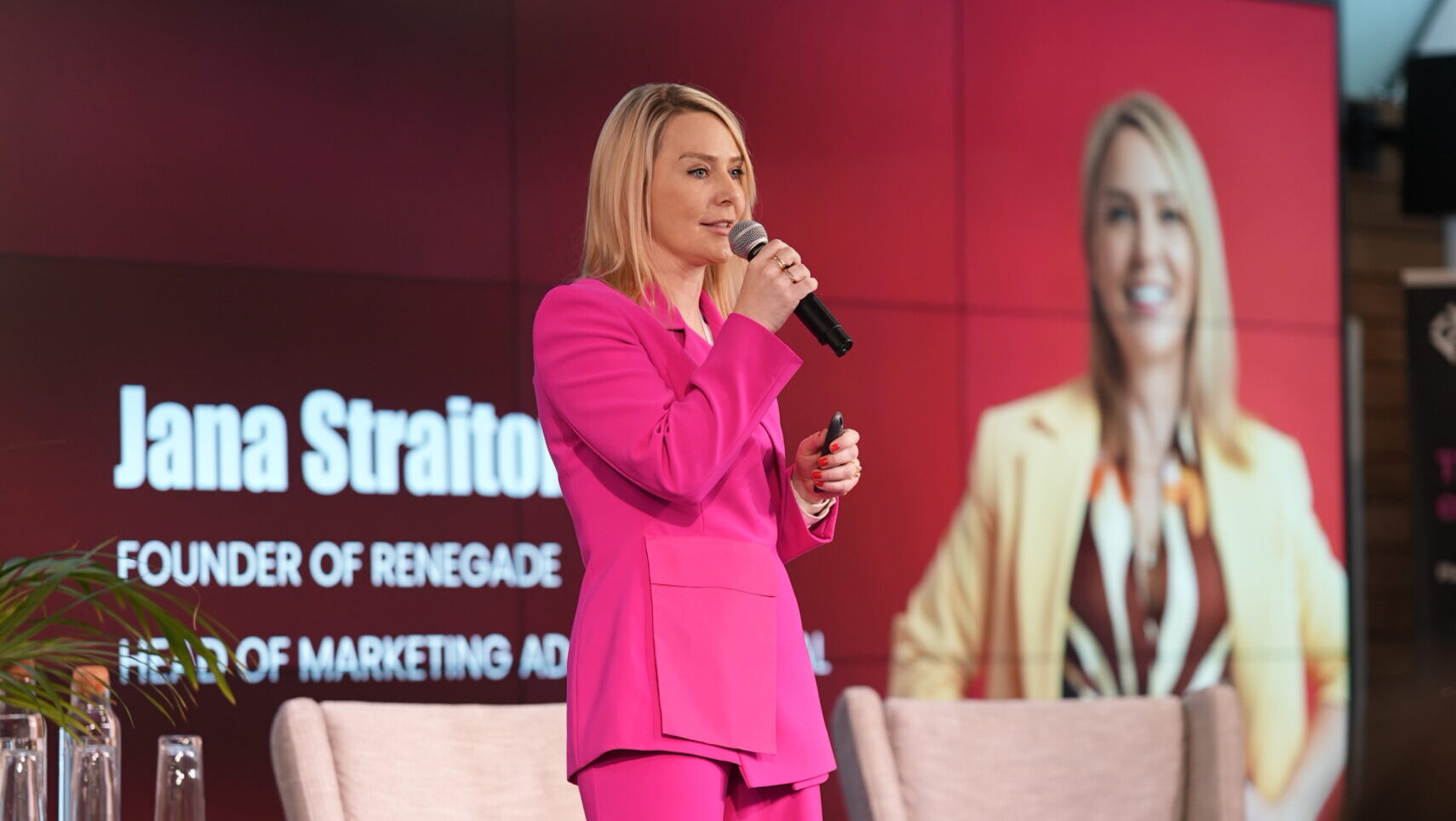
Cramming this many marketeers into the Growth Marketing conference meant the afternoon was always going to be a loud affair. Jana Straiton, Head of Marketing for Adobe and previously PayPal, delivered the keynote on building a fintech brand of the future, emphasising meaningful brand experiences, including contactless payment dogs to save a rescue shelter!
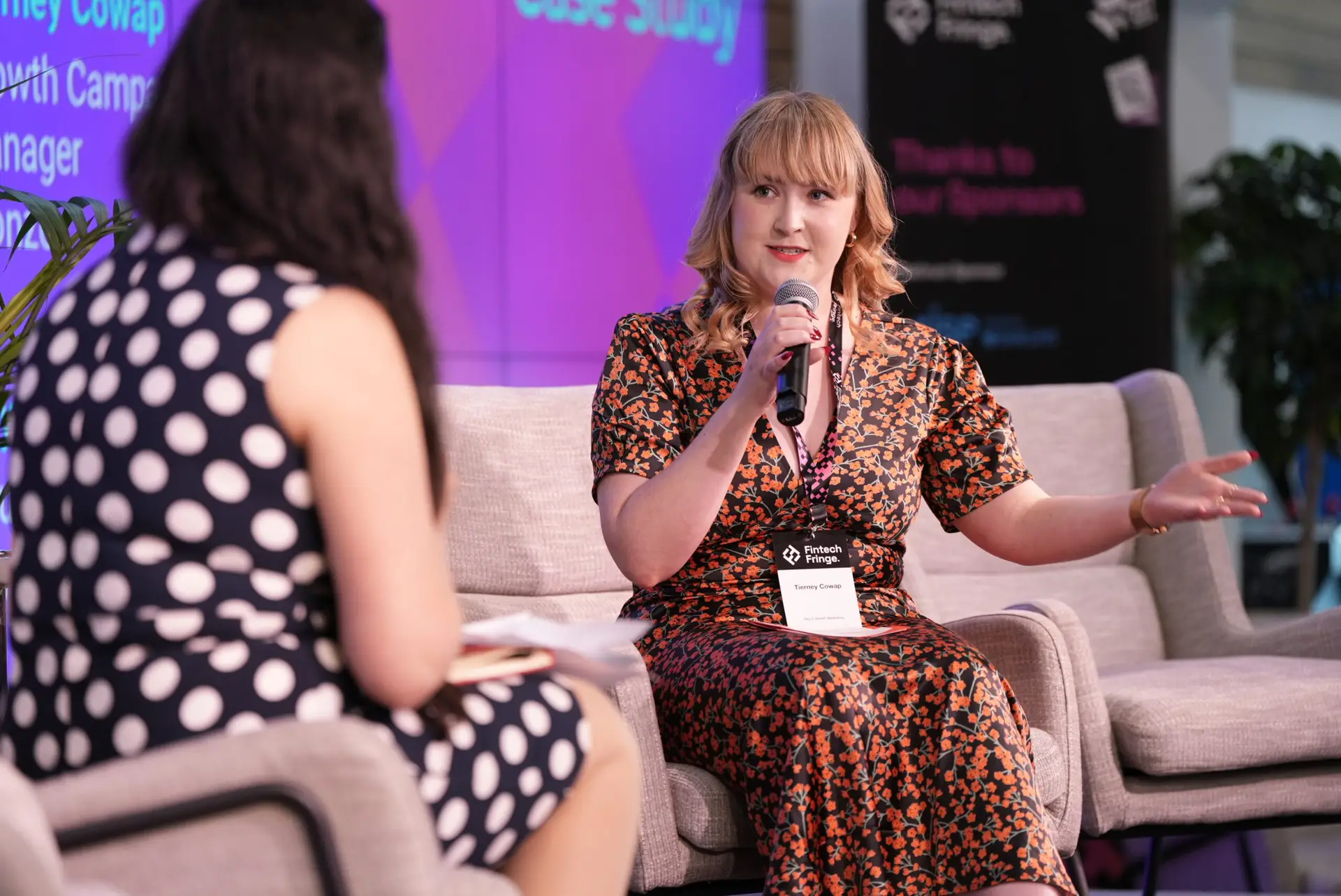
Tierney Cowap from Monzo Bank shared insights on shifting from word of mouth to full-branded campaigns with ‘Money never felt like Monzo’. The campaign is all about the emotions money evokes: “Money can feel so scary and jarring and overwhelming. At Monzo we aim to help people feel more confident and empowered to tackle their own particular money goals.”
Mic drop moment
Practicality is key at Fintech Fringe, and our next session helped the audience navigate the regulatory minefield of fintech marketing, with Zhenya Winter of Bottomline, Amélie Arras of Zumo, and Lucy Heavens of Salv. A show of hands found the audience overwhelmingly pro-regulator. The panel discussed strategies for adapting to the dramatic regulatory changes affecting fintech marketing, and even included an actual mic drop from Zhenya Winter.
Huge thanks to Thought Machine for hosting us and Payal Raina for being a star MC for the day.
Day 4: regulation & compliance and investment
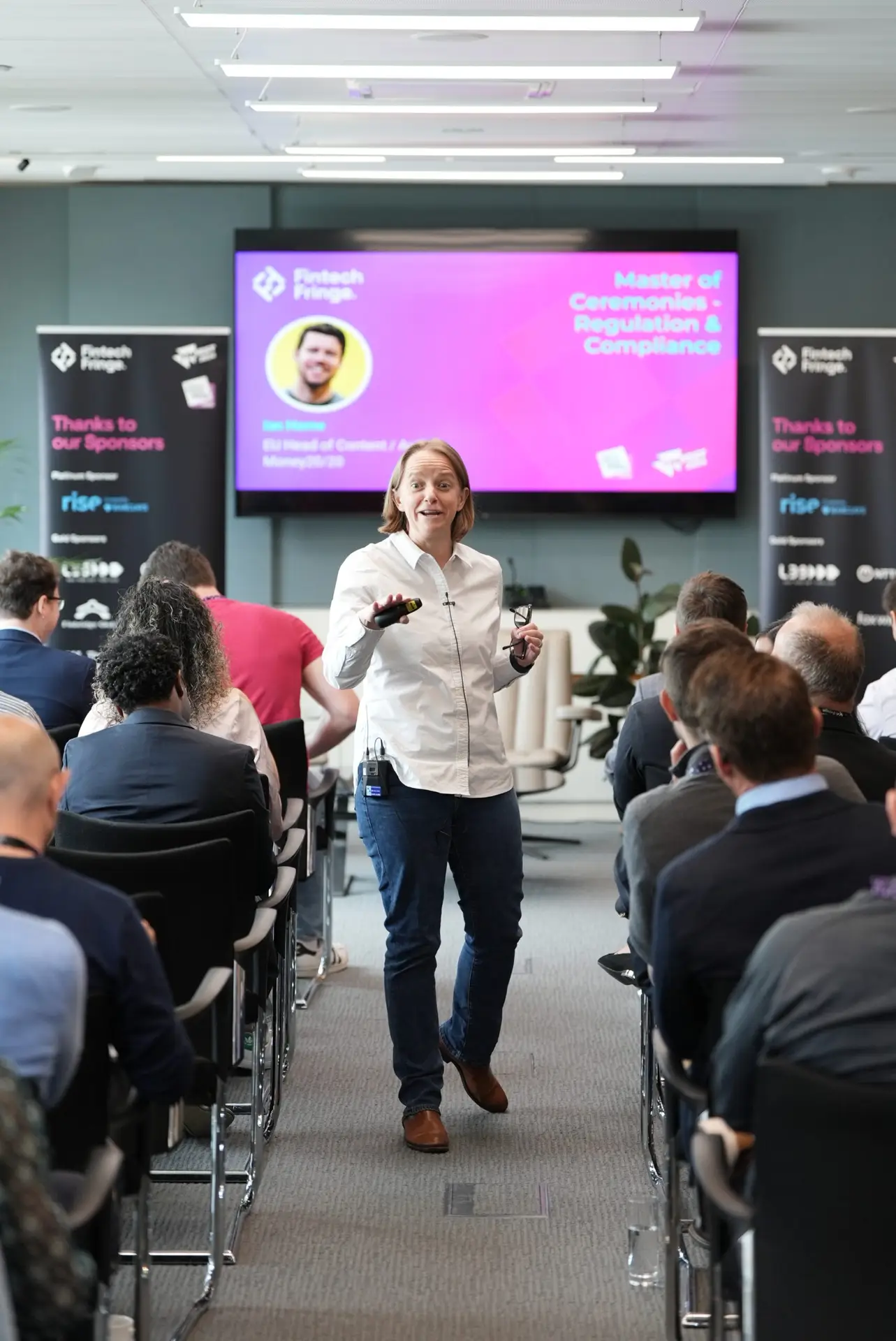
On the final day we were hosted by Fox Williams, in their event space overlooking the HAC grounds in Finsbury Square. Money20/20’s Head of Content EMEA, Ian Horne, joined us fresh from Amsterdam to moderate.
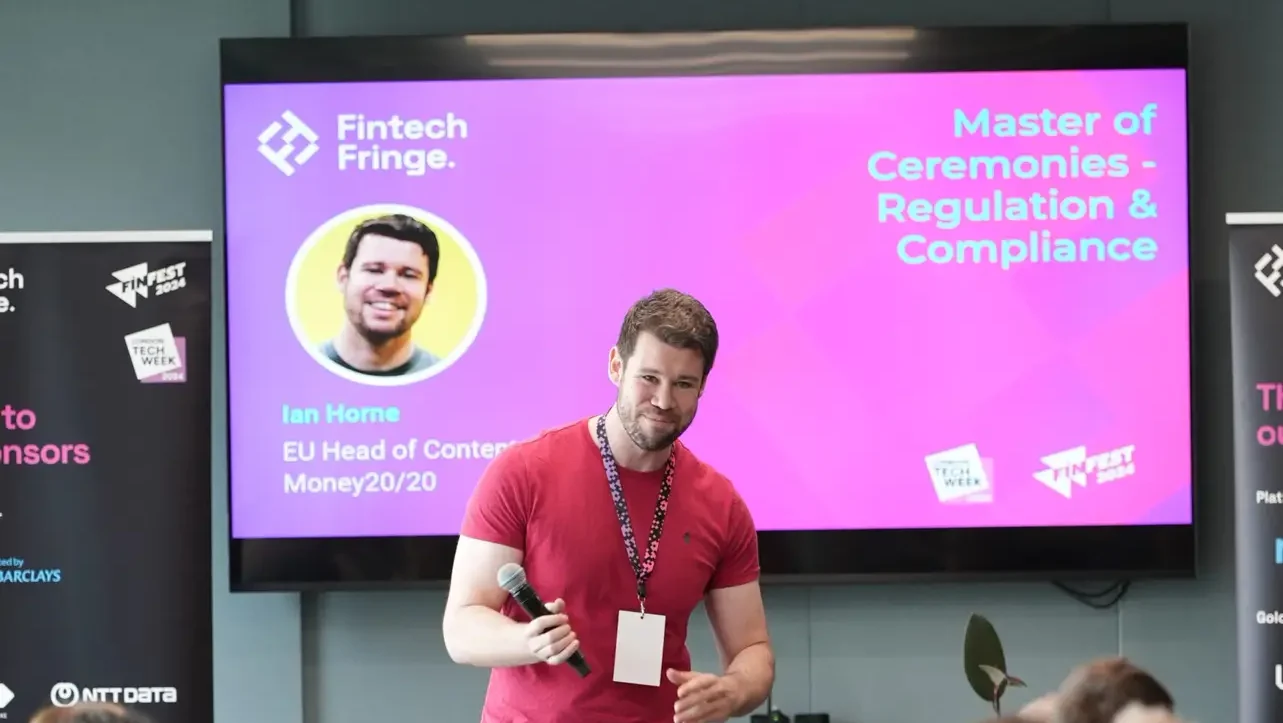
Protecting the customer
Caroline Wayman gave a powerful keynote on the evolution of customer protection, bringing home how it can go wrong if the consumer is not protected in finance, even to the tune of over £30 billion. One of the biggest issues in the finance industry is that “it always takes quite a long time for the sector to accept there’s a problem.” On open banking: “We want to be optimistic. We want to innovate, but we need to do this in a regulatory compliant way.”
The ultimate fintech scale-up legal guide
Chris Hill, a partner at Fox Williams, gave a standout presentation on legal strategies for fintech scale-ups, stressing the importance of avoiding legal blind spots during long sales cycles with big institutions. He described it as “taming the gorilla!”: “Investigate the bank’s procurement process and identify key decision-makers at each stage of the process and their role.”
How to make friends, not enemies
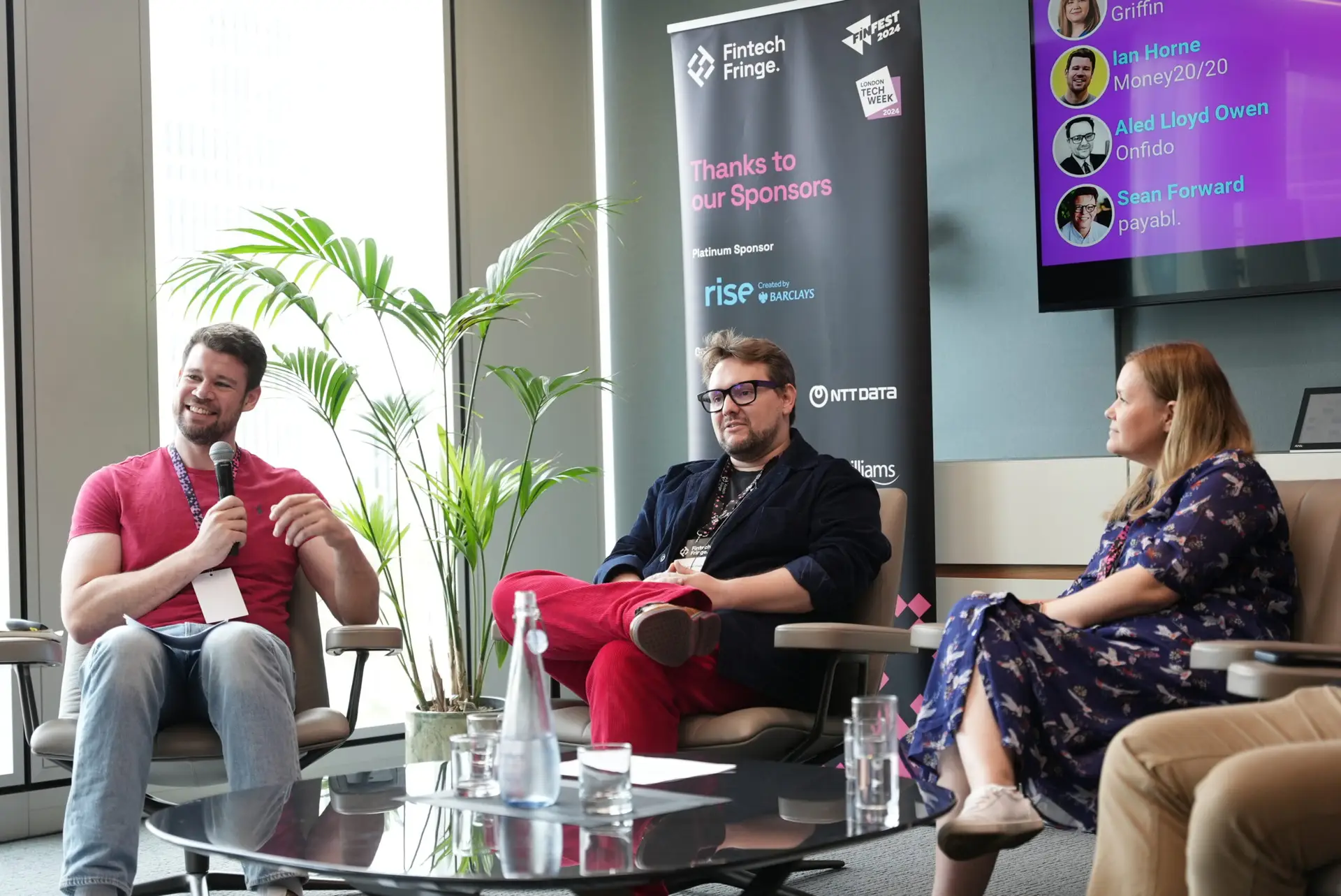
Ian Horne moderated a session with Dora Grant, CRO at Griffin, Sean Forward, CEO at payabl., and Aled Lloyd Owens of Onfido on building relationships with the regulators. Grant said: “establishing a good relationship from the beginning is crucial. And the reason being is they are the decision makers, and everything they tell you will not make you weaker, will make you stronger.” Forward added: “The emphasis on having a really, really strong business plan that can be challenged because it will be challenged was something that really also helped us as a business as we went through the process.”
Fundraising
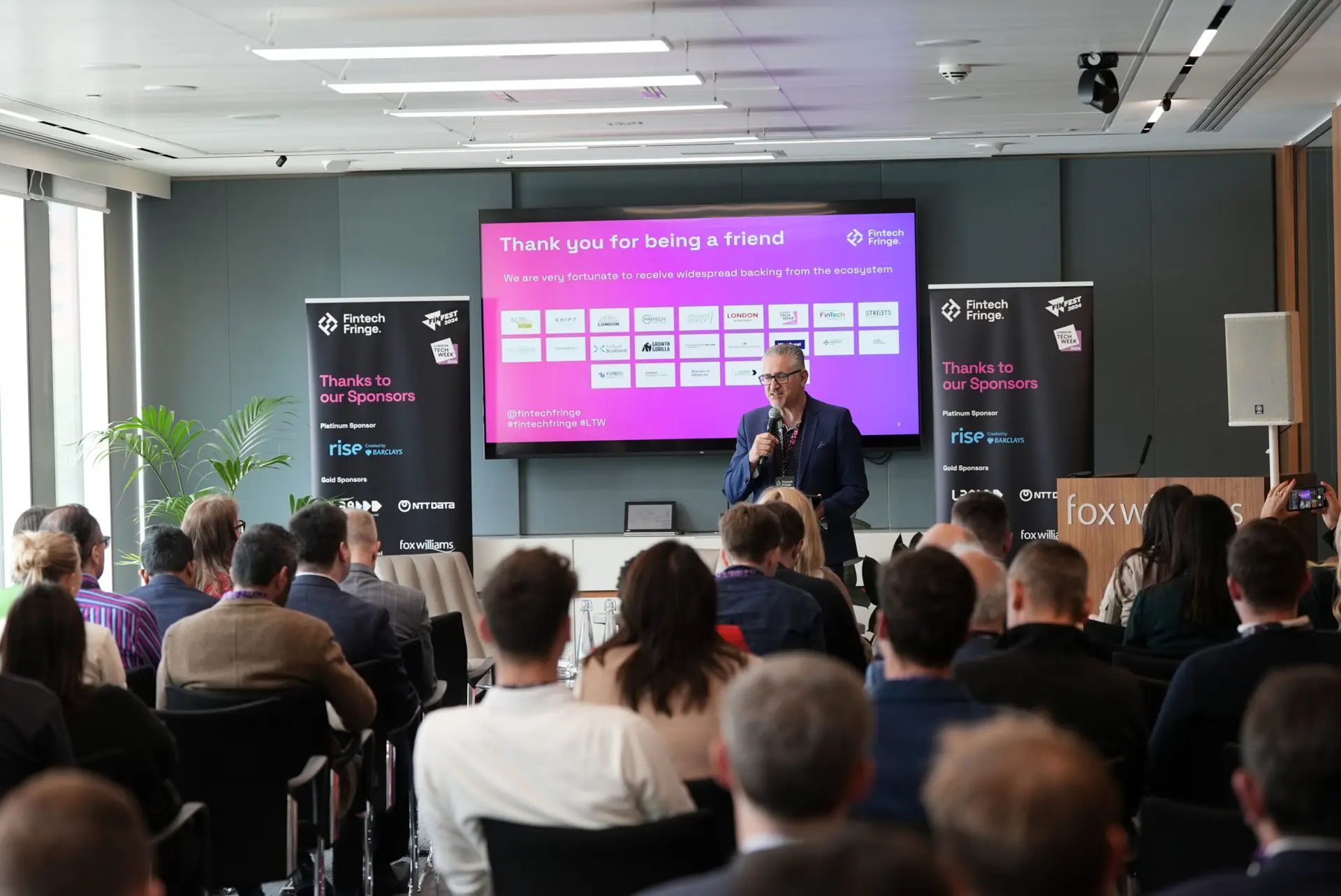
Our final track of the week was MC’d by Eric van der Kleij, a pivotal figure in forging the UK fintech ecosystem, who highlighted the important role of initiatives like Level39 and Innovate Finance: “This is the next generation right. This is going to build the next decade of growth.”
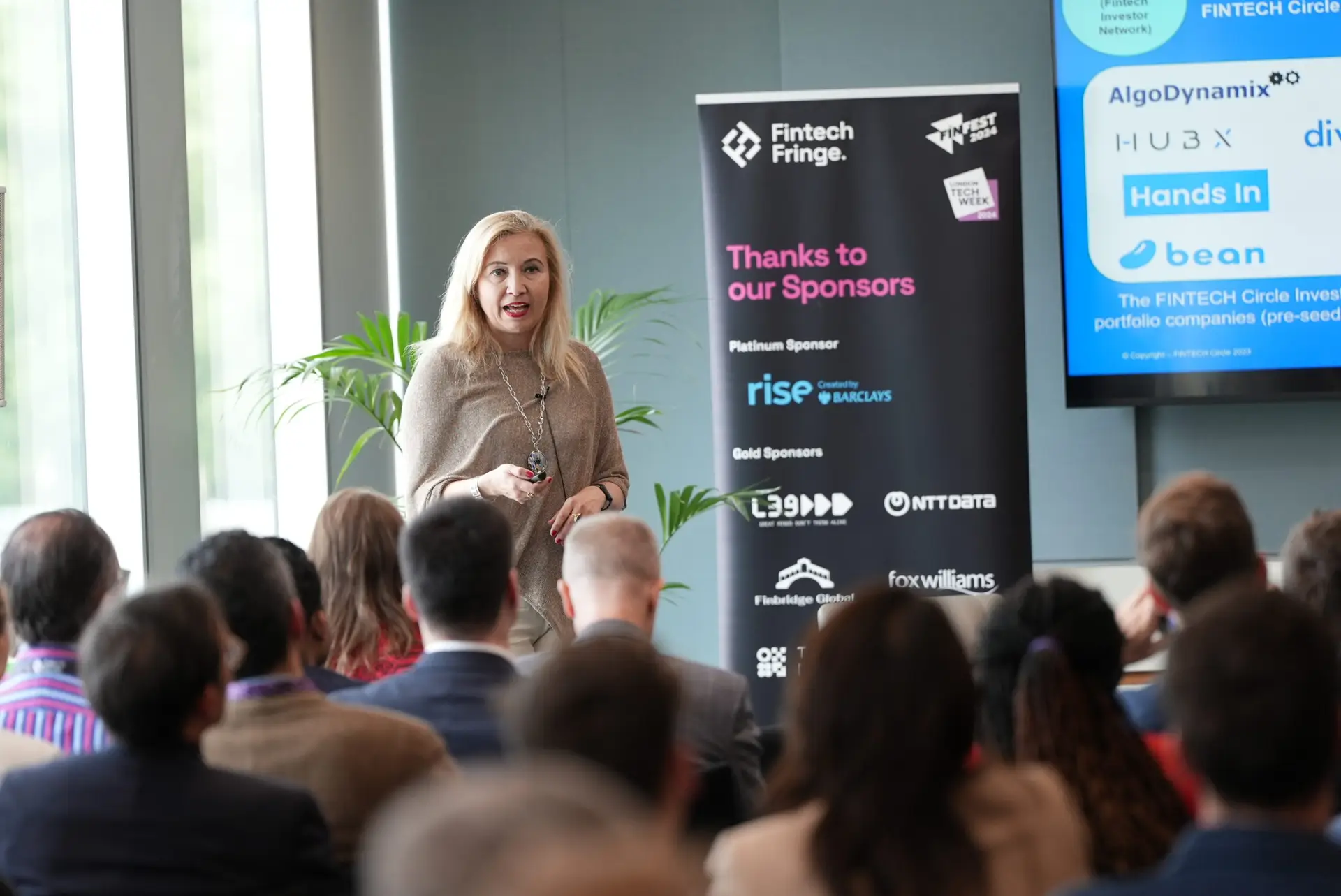
Our keynote for the track was from angel investor and industry connector Susanne Chishti, who shared a candid analysis of investment trends: global fintech investment dropping from $48 billion in 2019 to an estimated $30 billion this year, with companies focused on reducing burn and many opting for acquisitions at lower valuations. Her five key trends for fintech investment:
- Artificial intelligence: generative AI presents vast opportunities to enhance efficiency and investment potential, but also risks, such as fewer graduate jobs due to automation.
- Fintech for good: the push towards net zero by 2050 drives the need for sustainable fintech solutions.
- Embedded and open finance: companies are increasingly integrating financial services into their offerings.
- Easing of fintech funding: Chishti predicts an improvement over the next one to two years, with lower valuations making investments more attractive.
- Mainstream adoption: even people with no interest in finance or technology will use fintech daily, such as Uniqlo’s automated checkout.
Photos
More from the week


Thank you
The team behind the festival
Big shout out to the team behind Fintech Fringe this year, working tirelessly behind the scenes. Your dedication and commitment was truly outstanding. Thank you.
- Doug MackenzieHead of Content and Programming
- Melanie CarmichaelHead of Event Operations
- Noeline GunaratnamHead of Community Engagement
- Maninder PaulHead of Digital
- Liam HeffernanContent Producer