
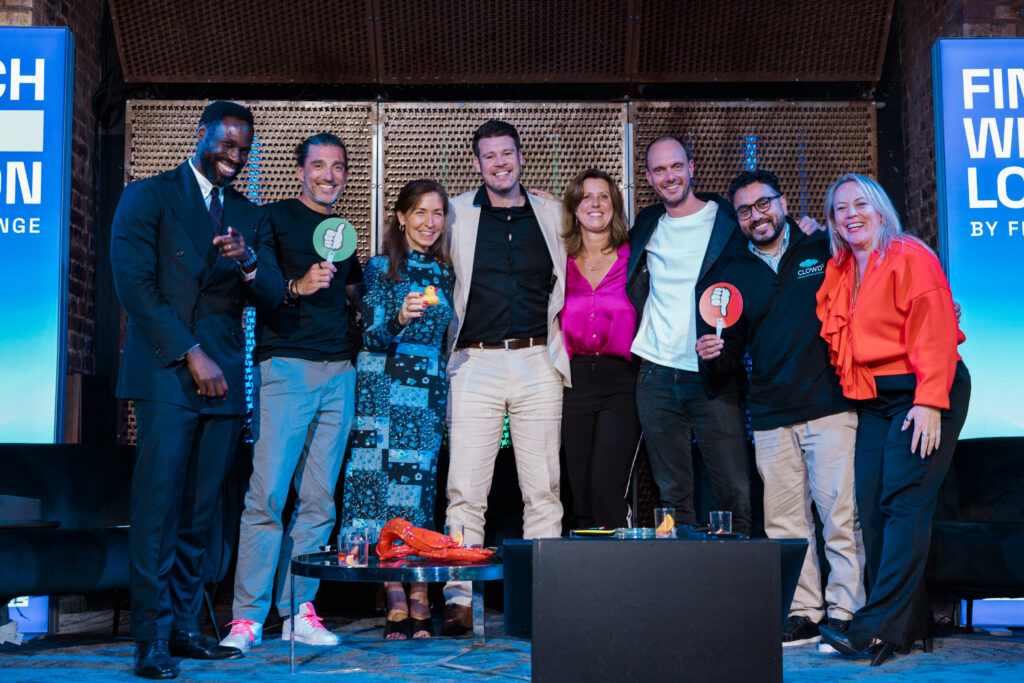

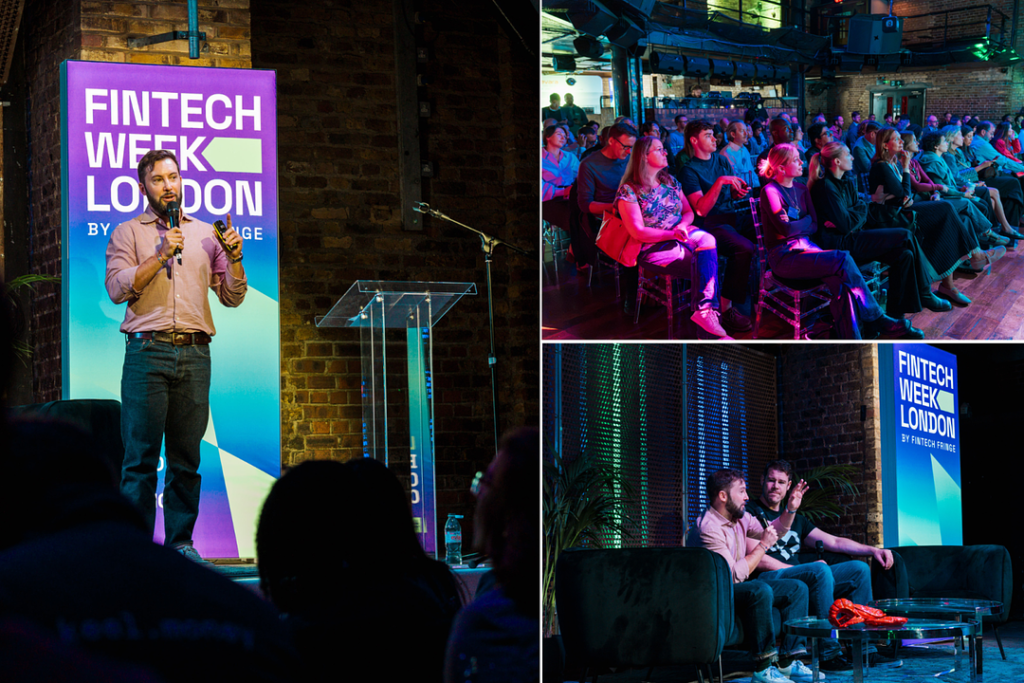
This may have been the first time a fintech conference was hosted in a nightclub. And not just any nightclub, but fabric, one of the world’s most famous clubs!
With just three months to bring everything together, we took a leap of faith with the venue. And what a choice it turned out to be!
When Ian Horne opened the Summit and asked who had been to fabric before, more than half the room put their hands up. Who knew we had so many late-night revellers in the fintech community? 🎶
But beyond the venue, it was the people, conversations and connections that made Fintech Week London 2026 what it was.
The Room in Numbers
607 people came through the Summit and more than 60% held a leadership role. The important brands were in the room including Amazon, HSBC, Lloyds, Mastercard, Visa, Coinbase, PayPal, Citi, Zilch, OpenPayd, Plaid, Griffin and the FCA through to the founders building what comes next, including Advai, Serene, Adclear, Gradient Labs and many more. That mix of established institutions and early builders in the same room is exactly what the takeaways below reflect.
Coinbase UK CEO Keith Grose , who opened Day 2, put it best:
“It was great to be at Fintech Week London, and to talk about the future of finance with so many people who are making it happen!”
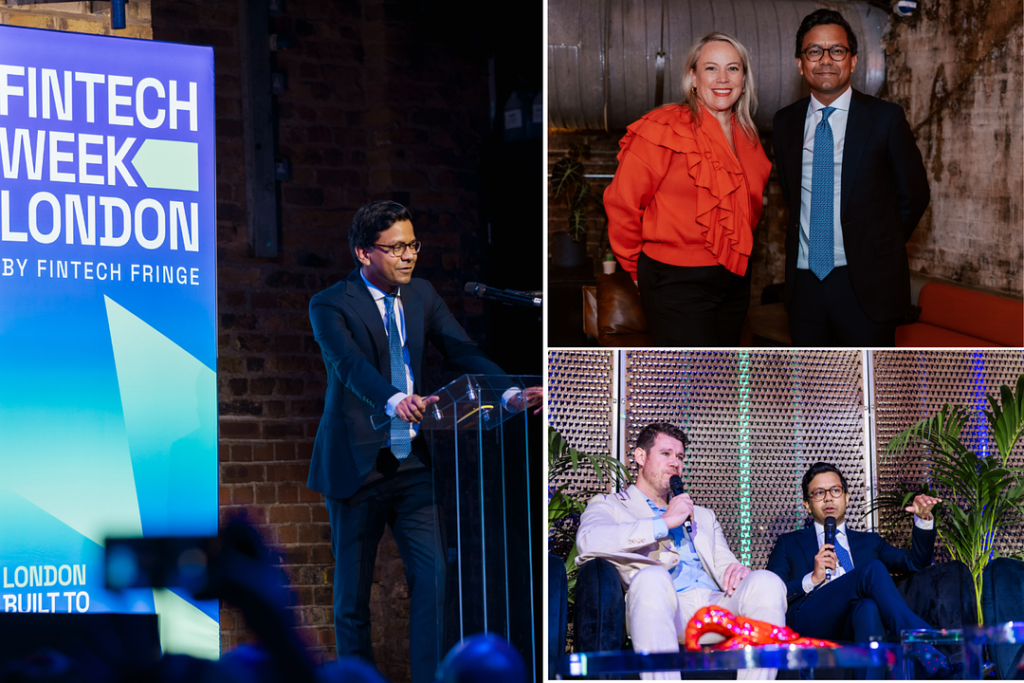
Day 1 – The UK opportunity was evident
We opened the Summit with the Rt Hon Kanishka Narayan MP, Minister of State for Artificial Intelligence, giving his first address to the financial services sector since taking on the role. His message captured the opportunity ahead:
“The future of British AI is the future of British fintech”
Rt. Hon. Kanishka Narayan MP , Minister of State for Artificial Intelligence
There is quite a lot wrapped up in that. UK fintech already accounts for more than a quarter of the country’s unicorns, and on trust, cybersecurity and adoption, the sector has a real role to play in shaping what British AI becomes next.
Asked where the biggest AI opportunity actually sits, the Minister gave three answers: chip design and inference infrastructure, frontier models beyond language in areas like materials and drug discovery, and application areas, where he put financial services near the top.
The specifics landed too. He pointed to the British Business Bank scaling investment to keep growing companies in the UK rather than losing them to the US, AI regulatory sandboxes modelled on the approach that helped challengers like Monzo emerge, a £500 million AI fund already backing companies including Callosum, Ineffable Intelligence and Isomorphic Labs, data centre investment spreading AI infrastructure beyond London to Wales, Oxfordshire and the North East, and a proposed 24-hour visa process for top global tech talent.
We will release a recording soon so you can watch his address in full on Fintech Fringe Forum.
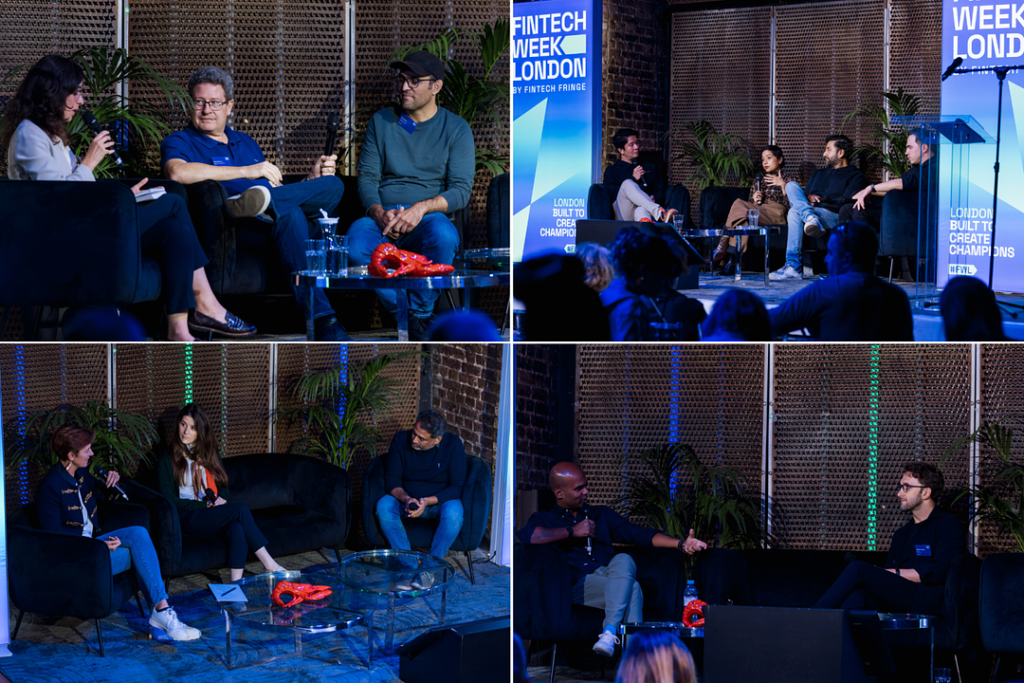
What we heard across the Summit
Across the two days, the conversations ranged from AI and regulation to trust, digital assets, infrastructure and what it actually takes to scale a fintech business.
Given our theme ‘Growth with AI’, it was no surprise AI was one of the biggest threads, but the conversation had clearly moved beyond experimentation. Sessions looked at governance, ROI, what is ready for production, and what happens when AI agents begin making decisions and transactions on our behalf. Nobody in the room was debating whether agents are coming, the real question was what happens once they arrive with wallets of their own.
Gradient Labs CTO Neal Lathia joined Zilch CTO Sean Hederman on the AI in Action stage for a session on moving from copilots to agents.
"We dug into where AI agents genuinely add value in workflows today."
Sean Hederman, CTO, Zilch
"Scope beats ambition. Agents earn trust on narrow, well-defined work long before they get near end-to-end ownership. Guardrails have to be deterministic. You can't rely on the model to police itself."
Neal Lathia, CTO, Gradient Labs
Santander’s Head of AI & Customer Insights, Moushami Verma, took the same theme further, looking at measurement, incentives and how to drive large-scale change with AI inside a bank the size of Santander.
The ROI discussion challenged one of the easiest metrics to reach for: time saved. Capacity created, economic value, accuracy and scale give a much better picture of whether AI is actually working. And once agents start transacting, questions around liability and guardrails become much harder to ignore. How much of our economy, and control, we are willing to hand over to agents rather than people is not a question for some future point, it needs addressing now.
Plaid’s Chris Corbett joined David Weinstein, Sasha Haco and Oliver Smith for a session on deciding what to build, what to buy and what to leave alone when it comes to AI, a practical framing that cut through a lot of the hype around the topic.
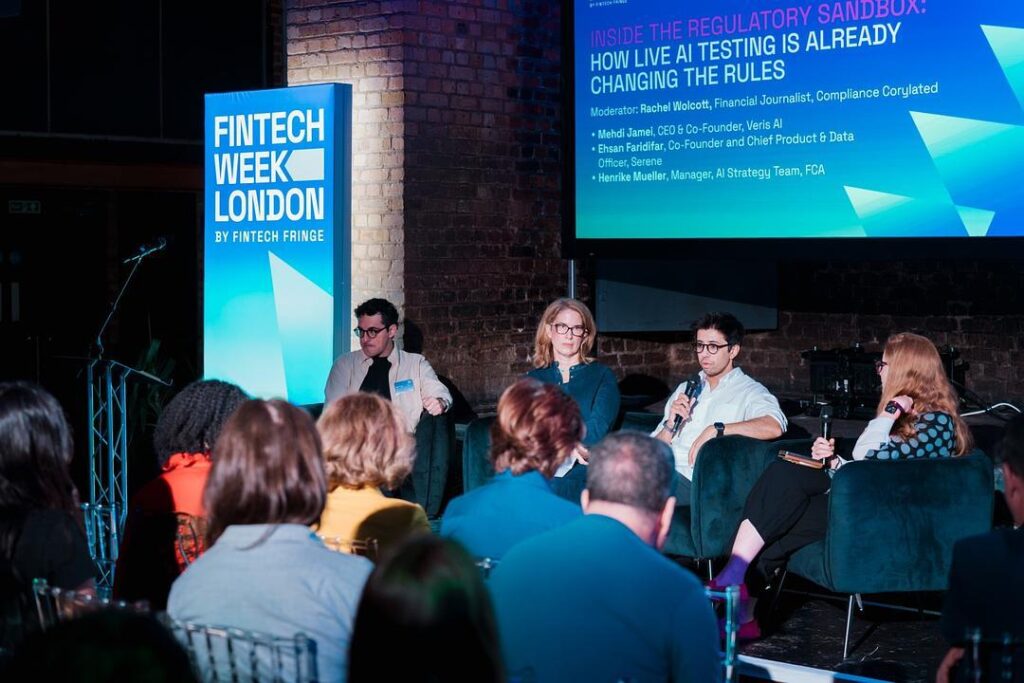
Regulation was moving in parallel. The focus was less on compliance as a fixed constraint and more on how it can support growth. From live AI testing in the FCA sandbox and new open finance rules to cross-border compliance, the recurring question was how to build regulation into products and expansion plans rather than bolt it on afterwards. The overarching theme: regulation should enable innovation, not stifle it.
The convergence between traditional finance and digital assets felt much closer too. Stablecoins, tokenisation, DeFi and agentic payments sat in the same conversation. With agentic payments, the discussion moved beyond whether an agent can pay to how it chooses between different rails, protocols and providers, and who is responsible when something goes wrong.
Trust came through repeatedly. Fraud, deepfakes, identity and customer protection all challenged the assumption that the best experience is always the one with the least friction. Sometimes, stopping bad actors means sacrificing part of the customer experience. Better signals and data can make onboarding smarter, but financial institutions still carry the risk when something goes wrong. Trust, in other words, is the product.
That thread ran through the session with AVIEL Intelligence’s Peter Griffin and Money20/20 Europe’s Oliver Smith highly entertaining but informed fireside chat, walking through the latest scam intelligence data, what it means in practice, and how the financial sector can act on it.
Alessandro Hatami, former executive at Lloyds Banking Group, PayPal and GE Capital, pulled the day’s threads together neatly:
"Nobody was debating whether agents are coming, but what happens when they arrive with wallets of their own. Trust is the product."
With fund managers in the City handling around $12 trillion in assets, London is starting from a position of real strength. The challenge is making sure the infrastructure keeps pace, from faster payments to less fragmentation. Greater regulatory clarity and 24/7 tokenised markets are already changing how finance works, while stablecoins could give AI agents a way to transact without relying on a conventional bank account, bringing agentic commerce much closer. The bigger point was about control: building a financial system that moves faster, connects better and puts more power back in the hands of users.
Day 2
Scale, Growth & Infrastructure
The wider UK opportunity came back into focus when Coinbase UK CEO Keith Grose opened Day 2 with one big question: who gets to control the future of finance?
"It should be everyone here and all who participate in financial services."
Keith Grose, UK CEO, Coinbase
With fund managers in the City handling around $12 trillion in assets, London is starting from a position of real strength. The challenge is making sure the infrastructure keeps pace, from faster payments to less fragmentation. Greater regulatory clarity and 24/7 tokenised markets are already changing how finance works, while stablecoins could give AI agents a way to transact without relying on a conventional bank account, bringing agentic commerce much closer. The bigger point was about control: building a financial system that moves faster, connects better and puts more power back in the hands of users.
"Infrastructure, payments and B2B fintech continue to attract significant attention from both investors and strategic buyers. London's position as a global fintech hub remains incredibly strong. International fintechs continue to choose the city as a place to raise capital, access talent, build partnerships and scale."
David Butcher, Head of Fintech & Cyber, London & Partners
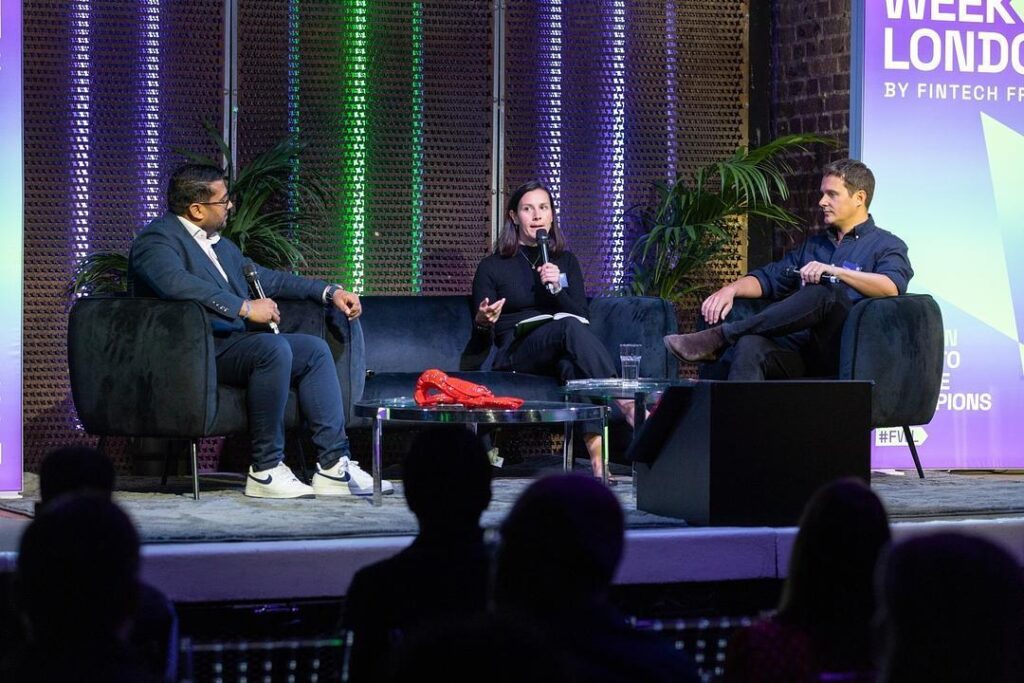
London & Partners wasn’t the only voice on international growth. The panel “From UK to Europe to Global: The Expansion Playbook” brought together GTM advisor Irina Chuchkina, Tunic Pay’s Nicky Goulimis and LemFi’s Ridwan Olalere, moderated by SEMAFOR Africa’s Alexis Akwagyiram, for a candid look at what it actually takes to enter new markets and the lessons picked up along the way.
From there, the programme shifted towards execution. Operating models, infrastructure, partnerships and capital all came back to whether businesses can actually support growth.
Fractional CPO Jim MacDougall spoke on hiring and leadership at scale.
"The things that most often determine whether a fast-growing business keeps its momentum: hiring force multipliers rather than simply adding headcount, putting enough structure in place to enable speed, and embedding ways of working, including disagree and commit, that help teams decide fast and move on."
Jim MacDougall, Founder, Rocks Fuel
OpenPayd’s COO Yasemin Swanson joined Paymentology CEO Jeff Parker and Agilicist’s Darren Emery for the Operating Model Design panel.
"Build clarity before you build layers."
Yasemin Swanson, COO, OpenPayd
Partnerships are tested when things break, while investors are putting more weight on sustainable growth, strong fundamentals and clear paths to profitability. Capital is still available, but the conversation made clear that investors are becoming more selective, particularly in mature parts of the market where consolidation is starting to play a bigger role.
London Fintech Showcase
Ones to Watch, in partnership with London & Partners
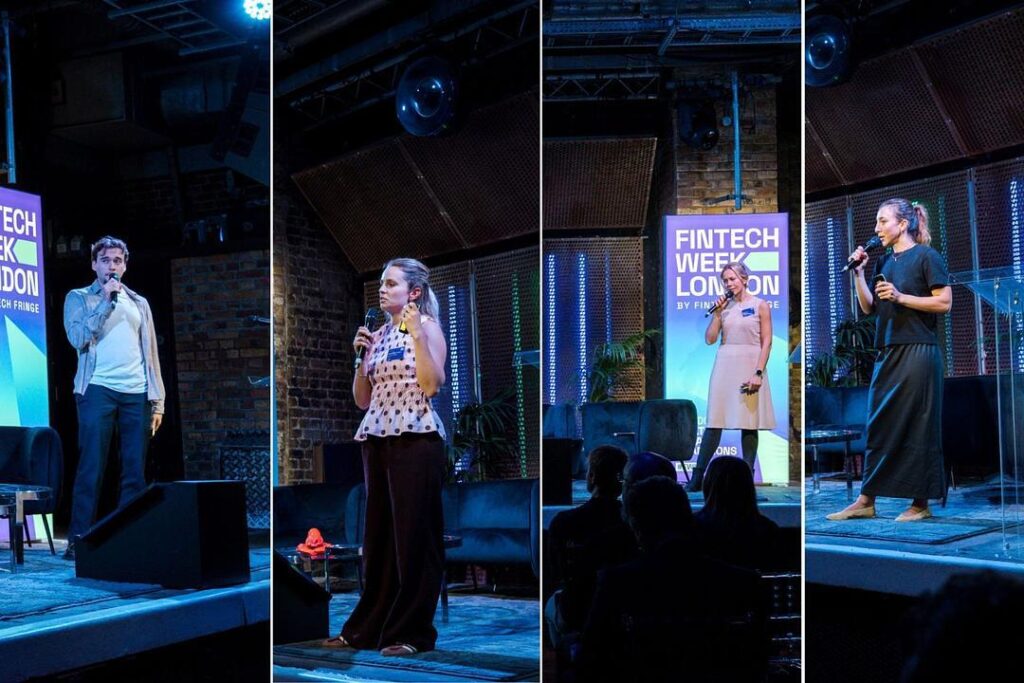
We closed off Day 2 with a showcase of what we consider some of the best London trailblazers. Big thanks to our friends at London & Partners for their support with this.
We put the spotlight on emerging AI-native businesses building across a wide range of financial services, from risk, compliance and due diligence to financial wellbeing, trade finance, cash management and enterprise infrastructure. What stood out was just how broad the use cases have become, and how quickly companies are moving towards more agentic products.
Advai, for instance, is helping regulated industries test and monitor AI models so teams can better understand what is reliable enough for day-to-day use.
Serene is approaching the opportunity from a very different angle, building infrastructure to help banks and financial institutions better identify and support customers at risk of financial difficulty.
Treefera is building an AI-native first-mile intelligence platform, bringing fragmented real-world data together into a more consistent intelligence layer for enterprise decision-making.
Eunice.ai is building an AI analyst for due diligence and ongoing monitoring across digital assets and private markets.
Adclear.ai is helping financial services marketers keep content compliant as regulatory scrutiny increases and teams publish across more channels.
Snowflake is helping enterprises connect data and AI on one platform, making it easier to build and scale AI across the business.
Beyond AI widened the lens further.
Traydstream demonstrated how they are automating trade finance workflows.
Jigsaw shared how they are turning complex financial information into clearer visuals.
Bondsmith showcased their technology and advisory services around cash deposits.
The Great Debate
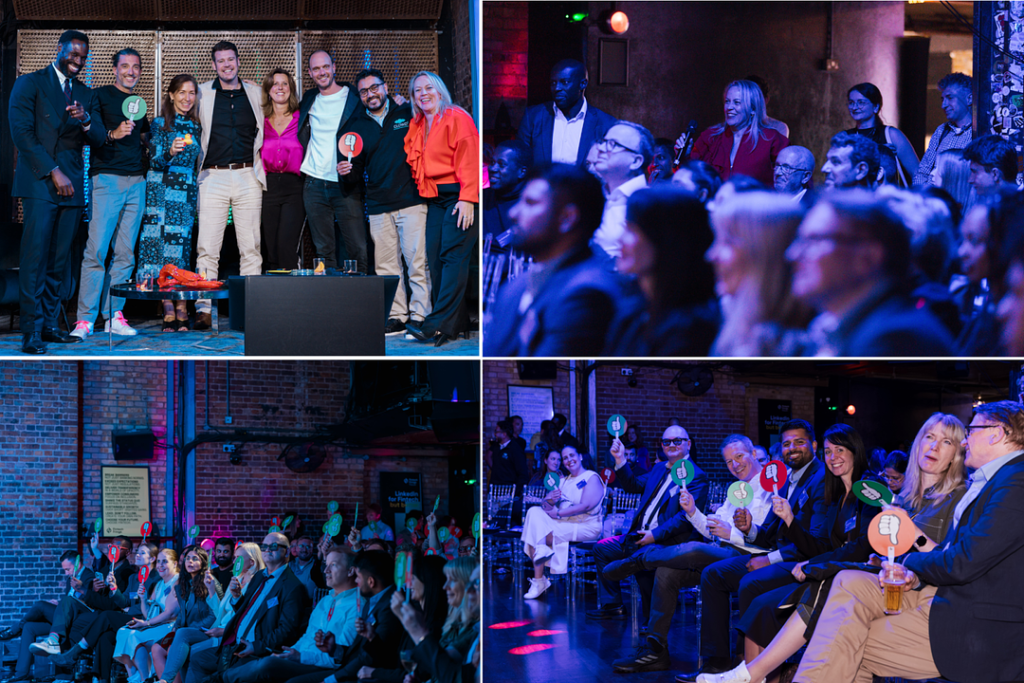
We returned with another showstopping performance of The Great Debate, with Team Blue, captained by Laura McCracken (The Board Alchemist), alongside 🥃Jovi O. (ONE.io) and Jeff Parker (Paymentology), taking on Team Pink, captained by Nathalie Oestmann (Mangosteen Advisory), alongside David Barton-Grimley (Cleo) and Suresh Vaghjiani (CLOWD9). The teams went head-to-head across three debates.
The big question this year was: Will Agents Drive Our Economy?
By 2035…
-
Your AI agent will strike a better deal than you ever could.
-
AI agents will conduct more transactions than humans.
-
Brands will sell to machines, not people.
There was plenty of energy in the room, but underneath it sat a much more serious question about authority. If agents start negotiating, buying and making decisions for us, how much autonomy do we actually give them, and who is responsible when they get it wrong?
That kept the debate lively right to the end, with Team Blue taking the win.
"Arguing against multiple points you actually agree with is a tough gig, and the opposition did not make it easy."
Suresh Vaghjiani , CEO & Co-Founder, CLOWD9
Stand by for our next edition before Christmas!
Across the week
Fintech Week London runs well beyond the Summit stage, and this year’s side events carried just as much energy as the main programme.
Tuesday morning, the Small Business Commissioner, Emma Jones , chaired “Boosting Investment in Paytech” at art’otel Hoxton with the Office of the Small Business Commissioner, bringing together investors and operators including Eugénie Colonna d’Istria of Finch Capital to look at how paytech investment can help small businesses tackle late payment.
At the same time in Shoreditch, Ecology Media, This Week in Fintech and the Midnight Foundation hosted the London Fintech Breakfast, where Midnight Foundation President Fahmi Syed and S&P Global’s Sophia Furber discussed what keeps London competitive as a fintech base.
"Don't penalise people who are successful, who are bringing growth to London. Encourage it."
Fahmi S. , President, Midnight Foundation
That evening, S&W hosted its flagship Fintech unicorn insight and opportunities panel at The Line, with Charles McManus (ClearBank), Emma Alley (Marshmallow), Adnan Ahmed (Starling Bank), Ryan Mendy (Unicorn Council and Zilch) and Steve Hulme (Zopa) sharing what it actually took to scale to unicorn status.
Wednesday took the conversation to Westminster. Mastercard’s Parliamentary Tech Showcase, hosted by Samantha Niblett MP with a keynote from the Economic Secretary to the Treasury, brought fintechs including Currensea, Tunic Pay and Money Carer into the Palace of Westminster.
Down the corridor, the APPG on Digital Markets and Digital Money ran an evidence session on whether crypto exchanges have a level playing field in the UK.
"When an industry-leading firm tells us it is not coming to the UK because we could not give it the certainty it needed, that is not a signal we can afford to ignore."
Back across the city that evening, Tech London Advocates & Global Tech Advocates ran their Fintech and Insurtech Open Mic at Penningtons Manches Cooper, hosted by Charlotte Hill with speakers Jonny Fry, Mark Scrivener, Angus Campbell and Nick Murray-Leslie, alongside smaller meetups spilling into pubs across the city.
The week closed on Thursday with a double header. Earlier in the day, the European Women in Payments Network’s London chapter held its regular meet-up, hosted by Melike Belli, with Tribe Payments’ Jo Lawrence and Maddison England among those representing the payments community. That evening came the The Fintech Marketing Hub CIC x DOJO AI Happy Hour at Smiths of Smithfield, a marketer-only drinks session for the fintech marketing community to finish the conversations that never quite wrap up on the show floor.
Thanks again
A big thank you to everyone who joined us, spoke, partnered, hosted and helped bring Fintech Week London 2026 to life.
We’re particularly grateful to our sponsors, HaysMac, fscom, Mountside Ventures, Evara (formerly Inbound FinTech), Enfuce, Lloyds Banking Group, INCAT and Bitget.
There are simply too many partners to mention individually, but special thanks to our Headline Partners, the Department for Business and Trade, London Stock Exchange and London & Partners.
And to the wider fintech community, thank you for being part of the conversations, sharing your perspectives and making the Festival what it was.
We look forward to bringing the community together again for Fintech Week London 2027, taking place from 20 to 24 September. See you there!